Where is the most authentic flamenco in Spain?
Seville, Jerez, Granada and Madrid all claim it. What authentic really means, what a traveller can actually check, and why the smallest room usually wins.
 By Carmen Ruiz, Seville flamenco show specialist & cultural experience guide
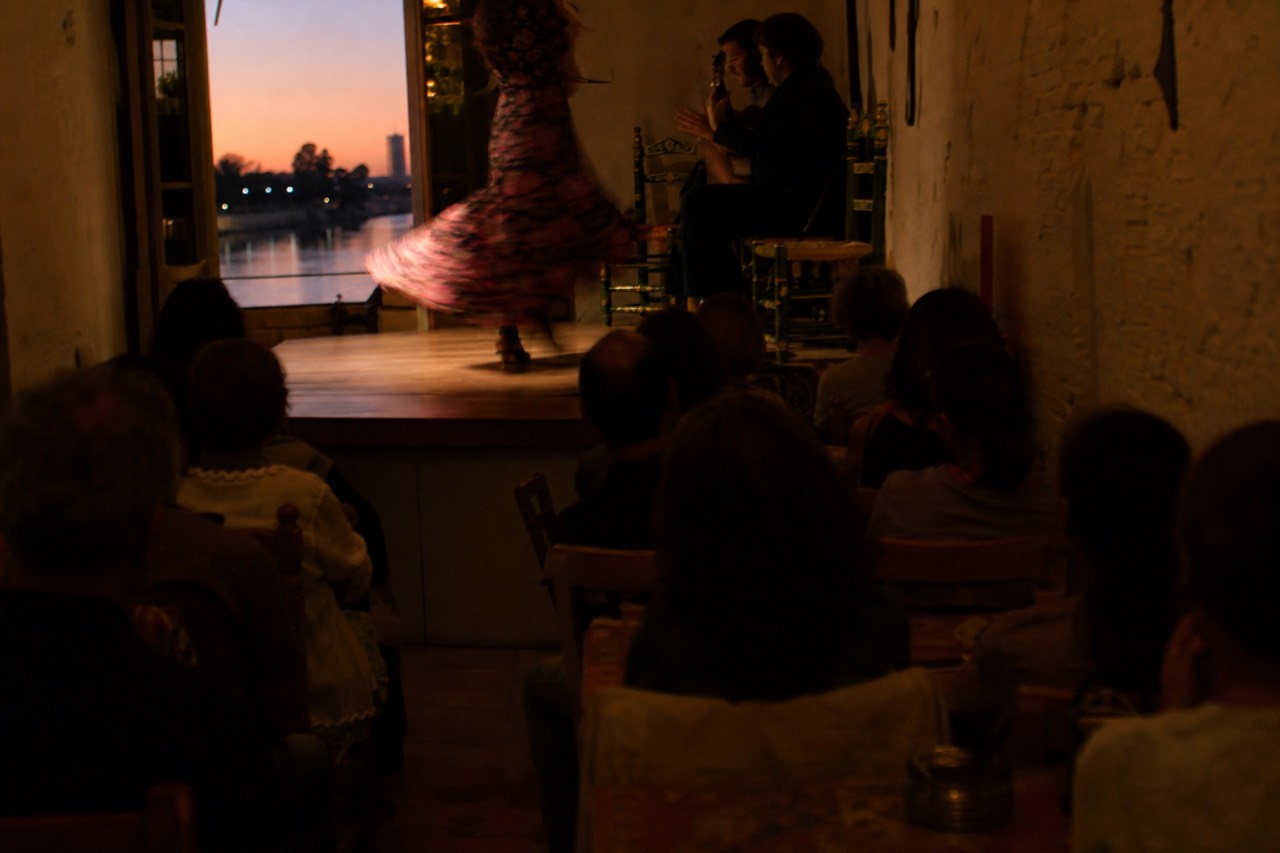
The word authentic does almost no work in flamenco, because nobody issues it and everybody claims it. A 200-seat theater with a sound system will use it on its poster. So will a cave in Granada, a bar with free entry and no stage, and a dinner room serving 150 covers before the curtain. What follows is the part of the argument that can actually be checked, and the part that is just civic pride.
Prices and review counts in the comparisons are snapshots, not live quotes. Compare the same travel date, currency and ticket tier before paying.
What does authentic actually mean in flamenco?
In practice it means working professional artists performing for an audience that came to listen, rather than staged folklore built around a meal. UNESCO recognises flamenco as a living expression of cante, baile and toque transmitted inside communities. Nothing in that definition mentions cave walls, dinner menus or ticket prices.
The useful test is who the room is built for. In a tablao the stage is the point, the seating faces it, and the artists work a fixed hour with a repertoire they choose. In a folkloric dinner production the meal sets the schedule and the show fits around it. Both can be enjoyable. Only one is organised around the music, and that difference is visible before you book, in running times, cast size and whether food is central or optional.
A second test is continuity. Rooms that have run for decades, or that fund teaching, keep artists in paid work locally, and paid local work is what keeps a tradition alive. The UNESCO listing for flamenco makes exactly that point about transmission: the art survives through communities and teaching, not through venues declaring themselves genuine.
What authenticity is not: a guarantee of quality. A raw room with an off-night singer will disappoint, while a polished theater with six strong performers can land hard. Travellers who chase the label instead of the cast frequently end up with the worse evening.
Does Seville have the strongest claim?
On checkable measures, yes. Seville carries the densest concentration of professional tablaos in Spain, with 16 bookable shows verified for this site alone, and the city's Bienal de Flamenco returns in September 2026. Triana's family tradition sits across the river from the tourist centre.
Density matters more than it sounds. Where a dozen rooms compete nightly, artists have steady work and audiences have real choice, which is how a scene stays professional rather than becoming a single showcase for coach parties. It also means the range is wide: an unamplified hour with four artists for $29 and a rooftop dinner package at $128 are the same city on the same night.
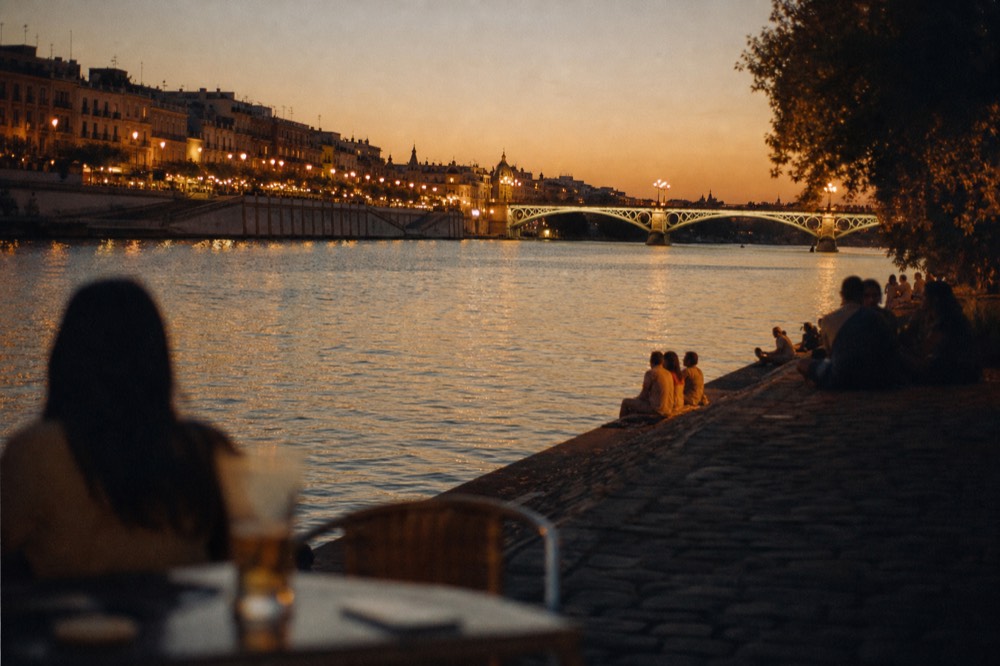
Triana is the reason locals push back on the idea that Seville flamenco is only for visitors. The district produced generations of performing families and still holds small rooms on Calle Betis and Calle Pureza, minutes from the centre by foot yet a different kind of evening. Triana's flamenco streets covers what is actually there now rather than the version on the postcards.
The honest caveat is the flip side of density: a city with this much product also has the most tourist-shaped flamenco in Spain, and some of it is thin. The 16 checked rooms are not equally serious, which is why the cast size, the running time and whether microphones are used tell you more than the venue's own adjectives.
What about Jerez, Granada and Madrid?
Each holds a real claim and they are not equivalent. Granada's Sacromonte offers zambra in cave venues in the old Gitano quarter, an experience Seville cannot replicate. Jerez is spoken of as a cradle of the form. Madrid concentrates large historic tablaos where Andalusian artists work. This site has checked figures for Seville and comparative data for Granada, not for the other two.
That last sentence matters more than the rest of the section. Ranking four cities on a page requires data from four cities, and printing a confident verdict on venues nobody here has verified would be exactly the kind of guidebook noise this article is arguing against.
| City | The claim you will hear | What this site can check | Honest caveat |
|---|---|---|---|
| Seville | The densest professional circuit and the biggest festival | 16 bookable shows, 38,810 traveller reviews, prices from $24 to $128, with cancellation terms depending on the selected option | Also the most tourist-shaped market in Spain, so quality varies widely |
| Granada (Sacromonte) | Raw cave zambra in the historic Gitano quarter | Cave venues including Zambra Maria la Canastera and Cuevas Los Tarantos, typically 20 to 50 euros, roughly 2.5 to 3.25 hours from Seville by direct train | A day-trip commitment; cave rooms are small and sell out |
| Jerez de la Frontera | A cradle of the art and of its own bulerias style | Not checked here: no venue, price or schedule verification was run for Jerez | Absence of a check is not a verdict against it |
| Madrid | Big historic tablaos and the national hiring stage | Not checked here | A working market for Andalusian artists rather than a birthplace claim |
Granada is the comparison Seville travellers actually face, because it is a realistic side trip. The trade is clear enough: caves and atmosphere against a deeper professional circuit and more nights to choose from. Anyone making that trip is usually making it for the Alhambra as much as for Sacromonte, and its entry runs on timed slots that go well ahead of the date, so check entry times here before committing to a train. Seville or Granada for flamenco works through the logistics, including whether the train back leaves you enough evening.
Is a small room really better than a big stage?
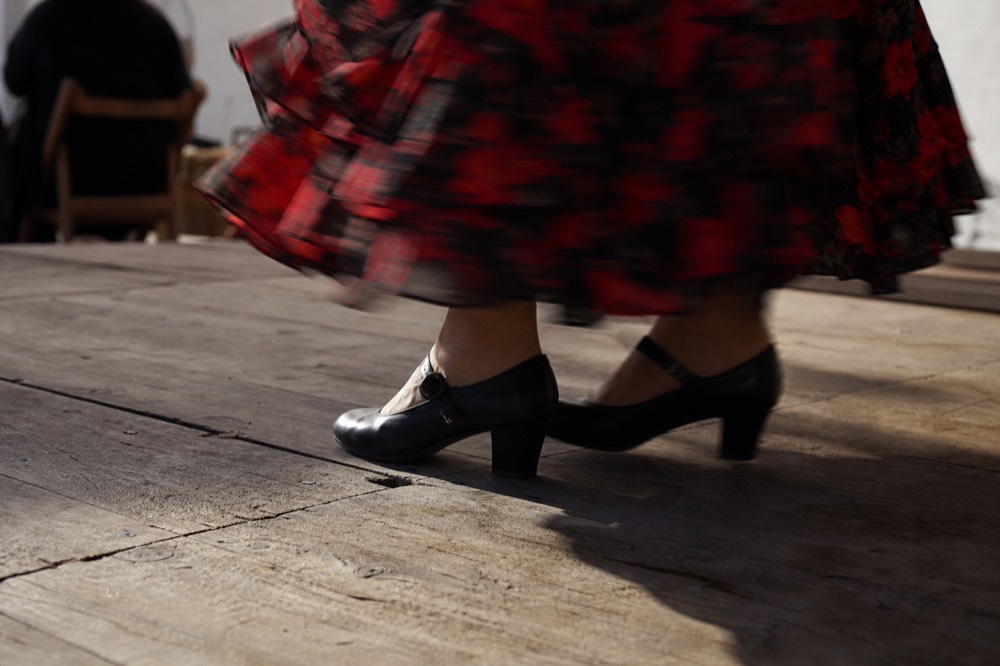
For most first-time visitors, yes. In a room of 40 to 60 people you hear breathing, string noise and the wooden boards under the feet, and the artists cue each other audibly. Theater productions trade that detail for sightlines, air conditioning and reliability. Neither is fake. They are different products at similar prices.
The size question is where most disappointment starts. Someone books the biggest, most-reviewed listing in the city expecting intimacy, gets a competent theater production with a sound system, and calls it a tourist trap. It was not a trap. It was a theater, priced and described as one, and Teatro Flamenco Sevilla has collected 19,771 reviews at 4.7 precisely because it is dependable, with several curtains a night; if reliable beats raw for your trip, see which start times are open and pick the early one.
Dinner formats deserve the same plain treatment. A three-course meal for a full room before an evening curtain is banquet cooking, produced at volume to a clock. Some of it is decent, and the tapas versions tend to fare better than full menus, but nobody should book a dinner show expecting the meal to compete with a good tapas bar two streets away. Book it because you want the whole evening in one place. The dinner and tapas formats are laid out with what each actually includes.
The smallest rooms are also the cheapest way in, which surprises people who assume intimacy costs more. Baraka in Triana runs an hour with four artists and a drink included from $27, and it is straightforward to check which nights still have seats if that is the scale you want.
What does the ticket price actually buy?
Between $24 and $47 you are buying the show itself, sometimes with a drink. Above that you are buying food, a bigger cast or a spectacle format. The band that matters most sits at the bottom: the cheapest tickets in Seville are not the weakest rooms, and several unamplified venues sit at the low end of the ladder.
| Price band | What it typically includes | Example rooms |
|---|---|---|
| $24 to $29 | The hour itself, small cast, often no microphones, sometimes a drink | Casa de la Guitarra, Orillas de Triana, Baraka, Casa de la Memoria, La Casa del Flamenco, Teatro Flamenco Triana |
| $34 to $47 | A drink included, a museum visit, or an unusual room | Puro Flamenco at the Dance Museum, Pura Esencia, Flamenco Dreams in the vault |
| $42 to $58 | A larger cast, a bigger stage, drink or tapas options | El Palacio Andaluz, Los Gallos, Tablao El Arenal |
| $112 to $128 | The show plus a full food programme or a guided evening | Seville tapas tour ending in a show seat, rooftop dinner with the show |
The bands overlap on purpose, because inclusions rather than quality set the price: a $47 seat in a twelfth-century vault with a drink and a museum visit sits above a $44 ticket to a room with eight artists on stage.
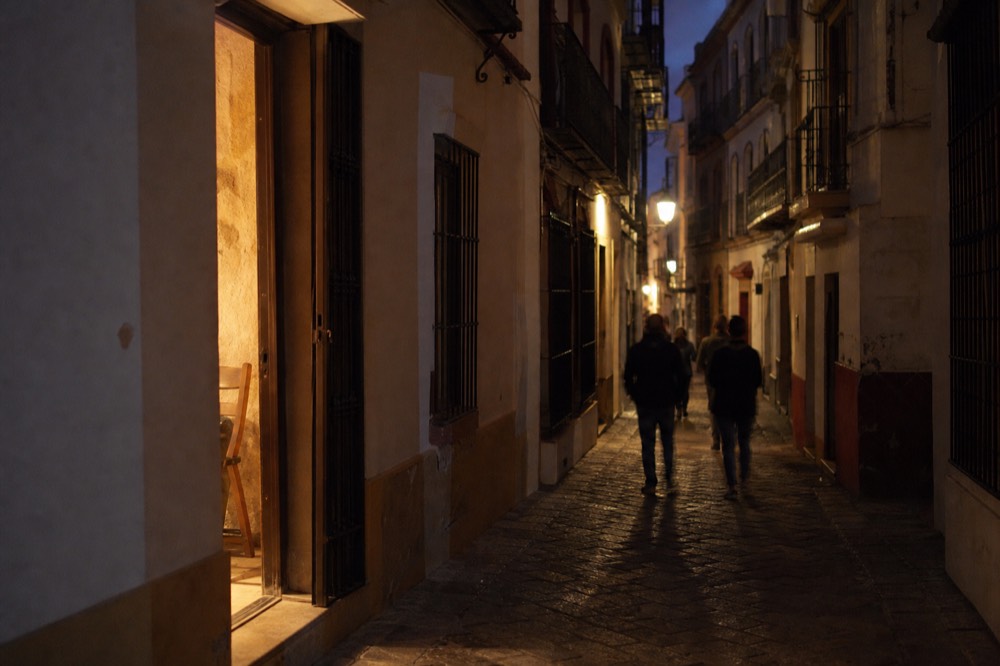
La Carbonería Is Temporarily Closed. La Carbonería announced a temporary closure for technical reasons on 3 June 2026, until further notice. Its own site has not posted a reopening announcement. Descriptions of its free-entry format below refer to how it operated before closure; do not plan an evening there without confirming that it has reopened. Read the venue’s closure notice.
There is also a genuinely free option, and pretending otherwise would be dishonest. La Carboneria still runs free flamenco in a rustic bar setting, roughly half-hour sets across the evening, and you pay only for drinks, with cash advised. Seats go to whoever arrives early, often before around seven in the evening. The free flamenco options explain when free is the right call and when a paid room is worth the money.
So where should a first-time visitor go?
Take the smallest room you can still get a seat in, in the city you are already visiting. For a traveller in Seville that means an unamplified hour with four or five artists, booked a few days ahead. Chasing a more authentic city usually costs a whole day of the trip and buys a difference most first-timers will not hear.
If the decision has to be made quickly, three shapes cover almost everyone. Pura Esencia on Calle Betis is the Triana riverside version, an hour with a guitarist, a singer and two dancers, a drink in the price and the strongest rating of any regular room checked here, so check dates and current prices early if the weekend is busy. Casa de la Memoria is the unamplified palace version with seats assigned by its box office. Tablao El Arenal is the big-room version, 75 minutes with up to 15 performers in a seventeenth-century protected building, though the bathrooms sit 22 steps down with no lift, which is worth knowing before booking for anyone who would struggle with stairs.
Timing changes the answer more than geography does. A trip landing in September 2026 coincides with the Bienal, when programming across the city deepens and artists who rarely appear in tablaos take stages; the Bienal's 2026 edition tracks what has been confirmed, and the official Bienal de Flamenco site publishes the schedule as it is released.
One last piece of honesty. Authenticity in flamenco is not a place, it is a night. The same room can produce a transcendent hour on Tuesday and a routine one on Thursday, because the art is improvised inside a fixed frame and the people on stage are human. Booking small, sitting close and staying quiet gives you the best chance at the good version. The small-room shows are grouped together with their cast sizes and prices, and what the audience shouts and why will stop you filling the silence that the singer is deliberately leaving open.
Build Your Flamenco Evening
Check Your Date Before Planning Dinner
Compare Options And Refine Your Choice
Hear a guitarist, singer and two dancers in a small Triana room. Show with a welcome drink described in the itinerary; additional drinks extra. Meet at Calle Betis; no transfer. Children accompanied by an adult.
Four artists perform without microphones in an intimate palace room. Show admission; no food or drink. Seats assigned by the box office; arrive at least 20 minutes early.
Experience a flamenco show inside the caves of Sacromonte in Granada. One drink included. Meet at Cuevas Los Tarantos, Camino del Sacromonte 9. No transport from Seville; infants sit on laps.
Compare Your Actual Evening Costs
Enter two complete quotes in the same currency for the same party. Include the show, food, drinks and transport you would buy. These are your estimates, not provider prices.
No option in this shortlist meets all those choices. Adjust your time, preference or eligibility filters, or reset to the general recommendation.
General recommendation; confirm the ticket option and guest requirements.
Pura Esencia On Calle Betis
Hear a guitarist, singer and two dancers in a small Triana room. Check your date before arranging the rest of the evening.
Show with a welcome drink described in the itinerary; additional drinks extra. Meet at Calle Betis; no transfer. Children accompanied by an adult.
Scheduled departures from Viator. Availability and final price are confirmed on Viator.