Free flamenco in Seville: every real option, and what free actually costs you
Yes, you can hear flamenco in Seville without paying for it. The catch is never the money. It is the queueing, the noise, and never knowing what you are going to get.
 By Carmen Ruiz, Seville flamenco show specialist & cultural experience guide
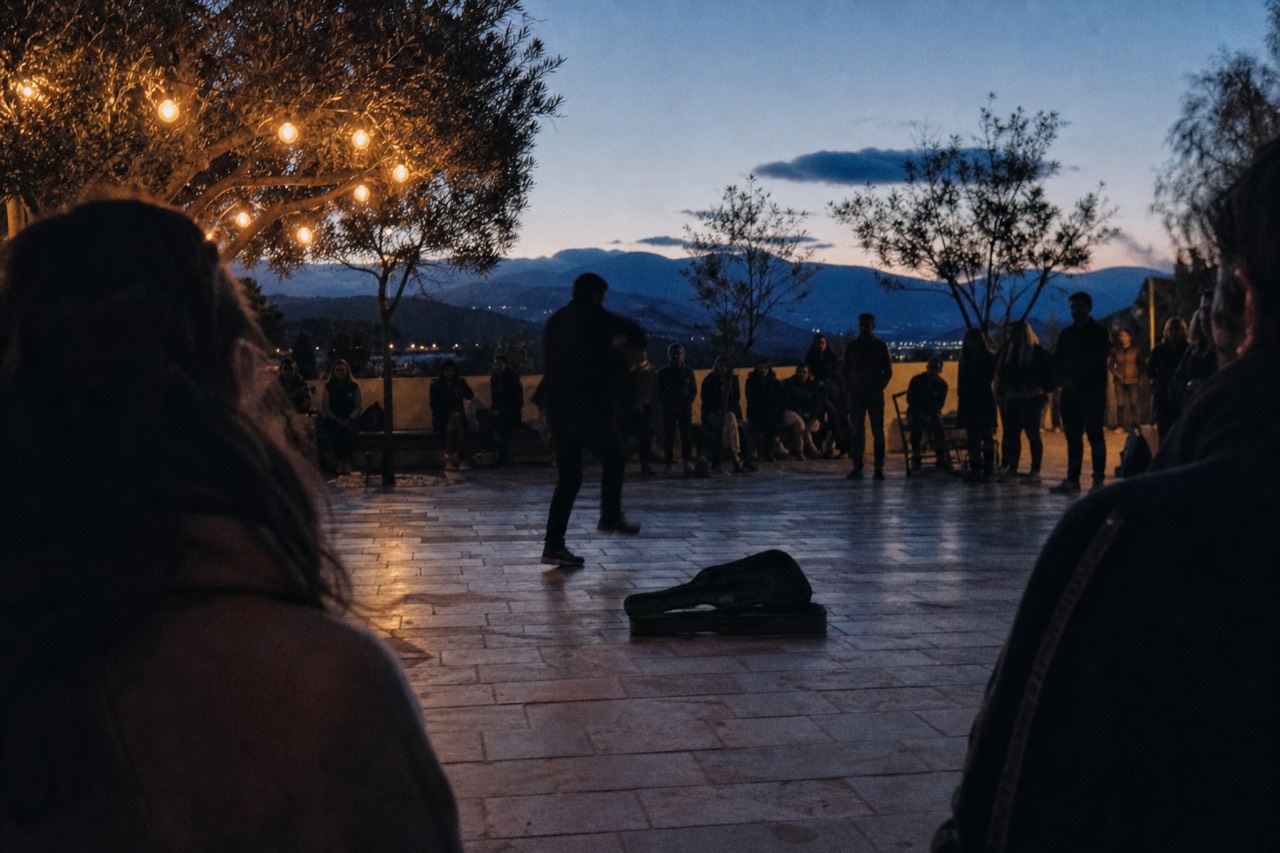
Short answer
Look for public performances, visitor-accessible peña events and free festival programming. La Carbonería has announced a temporary closure, so do not treat its old nightly schedule as current. Paid tablaos are a separate option.
La Carbonería Is Temporarily Closed. La Carbonería announced a temporary closure for technical reasons on 3 June 2026, until further notice. Its own site has not posted a reopening announcement. Descriptions of its free-entry format below refer to how it operated before closure; do not plan an evening there without confirming that it has reopened. Read the venue’s closure notice.
Two travellers stand in the same street in Seville at seven in the evening. One walks into a bar, pays nothing, waits an hour, and hears thirty minutes of flamenco over the noise of a hundred conversations. The other pays $24, sits down, and hears an hour of it in a room where nobody talks. Both had a good night. Only one of them knew in advance which kind of night it would be, and that difference is what this page is about.
Prices and review counts in the comparisons are snapshots, not live quotes. Compare the same travel date, currency and ticket tier before paying.
Where can you watch flamenco in Seville for free?
Free possibilities include street performers, peña recitals open to visitors and free festival programming. La Carbonería, historically the best-known free bar, has announced a temporary closure. None of these gives you a guaranteed nightly performance.
None of the four is a substitute for a tablao, and anyone telling you otherwise is selling a story. What they are is a genuine second layer of the city's flamenco life, one that most paid-content pages skip entirely because it does not convert. It exists, plenty of travellers enjoy it, and it deserves an honest description rather than a shrug.
The reliability ranking matters more than the list. La Carbonería historically offered free sets in a bar; its closure means it is not a reliable current plan. Street players are frequent but never scheduled. Peñas are real institutions with real calendars that are almost impossible for a visitor to plan around. Festival weeks are fixed in the calendar but deliver processions and fairground music rather than a seated performance.
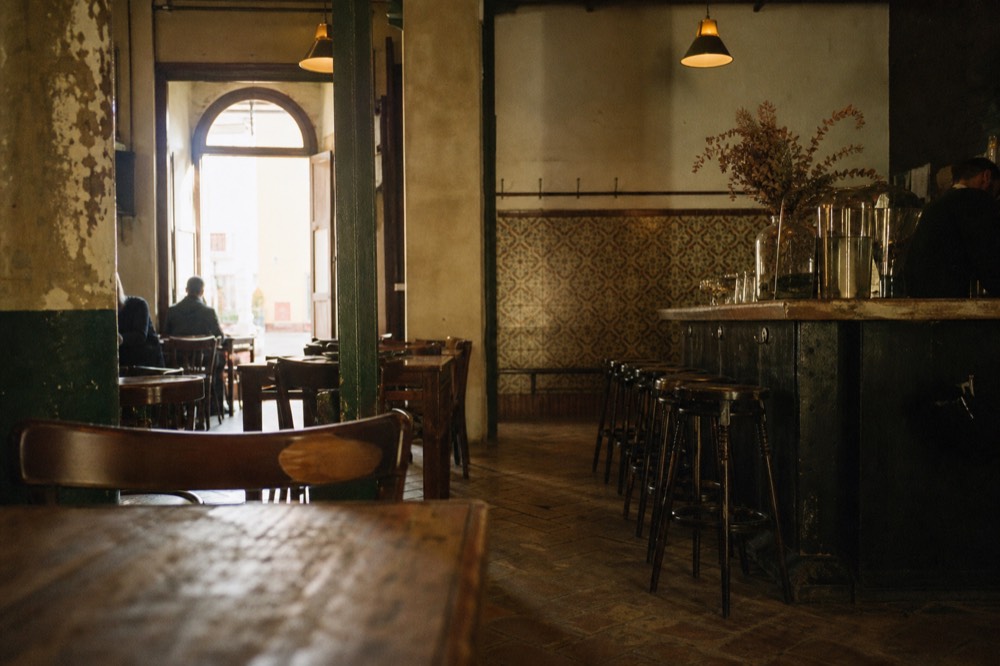
One category deserves an early warning, because it is where most disappointed reports come from. Bars and hotel terraces that advertise flamenco with dinner, at no cover charge, are almost always selling background music: a guitarist and a singer working through sevillanas while people eat. That is pleasant and it is not what the word flamenco means on the rest of this site. The tell is simple. If nobody in the room stops talking and there is no dance floor, you are listening to atmosphere.
Read the table below as a filter, not a menu. If your trip is short and flamenco is the reason you came, the free layer works best as a bonus on top of one ticketed hour, not as a replacement for it.
| Free option | What it actually is | When | Odds of seeing something good |
|---|---|---|---|
| La Carbonería | Bar with a performance space, free entry, drinks only | Temporarily closed | Confirm reopening before visiting |
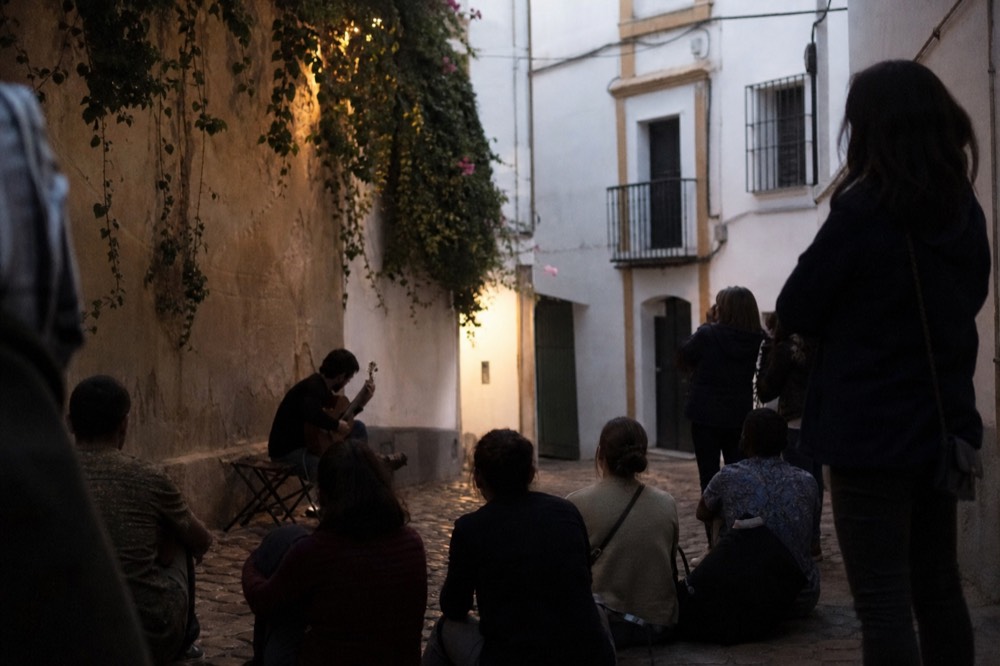
| Street players | Solo guitar, sometimes a dancer, tip-based | Daylight and early evening, weather dependent | Low to moderate, short bursts |
| Peña recitals | Members' club with its own calendar | Irregular, rarely listed in English | Low for visitors, high quality when it lands |
| Festival weeks | Processions, fairground music, public programming | Semana Santa, Feria de Abril, September Bienal | High spectacle, low tablao-style flamenco |
| Hotel or bar sevillanas | Background music for diners | Varies | Low, atmosphere rather than performance |
Is La Carbonería still the best free option?
It was a well-known free option, but it is temporarily closed. Do not use its former schedule to plan a current visit.
The full breakdown, including the seat-hunting timing, what a night there costs in drinks and who should skip it, is on the dedicated page for the old coal-yard bar. What belongs here is where it sits relative to everything else that costs nothing.
Before closure, against street performers, it won on length and intent: a half-hour set with a booked artist beats four songs before a busker packs up. Against peñas, it offered on access: no membership, no calendar hunting, no Spanish-language phone call. Its former year-round operation was convenient compared with occasional festivals; that advantage does not apply during closure.
Where it loses is against a ticket, and only in the ways a ticket can win. Nothing is published in advance, the bar noise is part of the deal, and thirty minutes is a third of what the paid rooms give you. Travellers who understand that trade going in almost always enjoy it. Travellers who arrive expecting a curated performance almost never do.
| Free option compared with La Carbonería | Where the bar wins | Where the other wins |
|---|---|---|
| Street players | Length, shelter, a real set | Costs nothing at all, no waiting |
| Peña recital | Access without membership | Artistic seriousness, local audience |
| Festival week | Runs all year | Scale and spectacle, once-a-year sight |
| Ticketed hour | Price, looseness | Sound, seat, length, certainty |
Is the flamenco at Plaza de España worth stopping for?
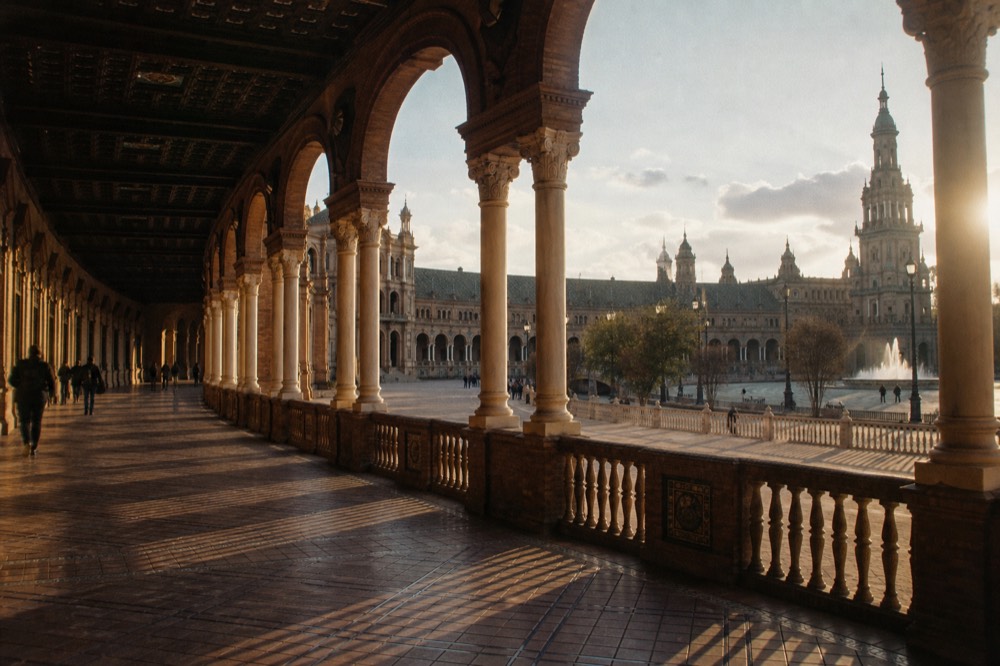
Worth stopping for, not worth planning around. The plaza and the streets near the cathedral draw guitarists and occasional dancers who play for tips, in short bursts, with no schedule and no shelter from Seville's heat. On a good afternoon it is one of the most photogenic things in the city. It is also five minutes long.
Street performance in Seville follows tourist footfall and temperature rather than a programme. The big semicircle of Plaza de España, the streets around the cathedral and the river walk are where the players set up, because that is where the crowds move. When the city is at its hottest, the afternoon slot mostly disappears: Seville's July normal high sits at 36.0°C and August at 35.5°C, and 2025 delivered more than thirty days above 40°C. Nobody dances in that.
The honest description of what you hear is a fragment. A guitarist working a plaza plays to a crowd that turns over every few minutes, so the material is bright, short and repeatable rather than deep. Cante jondo, the heavy end of flamenco singing, does not survive that format. What survives is rhythm and spectacle, which is precisely what a photograph wants and precisely what a listener does not.
Treat it as texture on a walking day, and put a coin in the case if you stop. Then, if the fragment leaves you wanting the whole thing, understand that the whole thing is an hour in a quiet room, and the cheapest one in the city runs at $24. Booking it while you are still standing in the plaza takes about a minute, and the current start times at Casa de la Guitarra tend to include an early slot that fits a sightseeing afternoon.
| Street flamenco reality check | What to expect |
|---|---|
| Typical length | A few minutes per set, crowd turns over |
| Line-up | Usually solo guitar, sometimes one dancer |
| Cost | Tips, entirely voluntary |
| Best conditions | Mild months, morning or early evening |
| Worst conditions | Peak summer afternoons, high heat |
| What you will not hear | Sustained cante jondo, full palo cycles |
Can visitors get into a peña flamenca?
Sometimes, but it is not a plan. Peñas are membership clubs run by and for local flamenco enthusiasts, with their own calendars, their own social codes and almost no English-language listings. When a public recital happens and you get in, the quality can beat anything ticketed. The odds of that landing on your two free evenings are low.
The peña is the most misunderstood thing in every free-flamenco article. It is not a secret venue, and it is not a hack for skipping ticket prices. It is a club: members pay dues, the club programmes evenings for its own community, and the artistic standard is high because the audience knows the repertoire and will not applaud politely through a weak singer.
For a visitor, three things go wrong. Calendars live on local social media in Spanish and change late. Some evenings are members-only regardless of goodwill. And even when a recital is open, it starts late, runs long, and assumes you already know what you are listening to. That is a wonderful evening for someone spending a month in Andalusia and a frustrating one for someone with a flight on Thursday.
The realistic version is this: if you are in Seville for a week, are comfortable in Spanish, and can hold an evening open at short notice, ask locally and take the chance when it appears. Otherwise, chase the same seriousness through a ticketed room that publishes what it does. Teatro Flamenco Triana channels its profits into flamenco teaching through the foundation behind it, which is about as close as a bookable hour gets to the peña spirit.
| Peña access, honestly | Position |
|---|---|
| Membership required | Usually, for regular evenings |
| Public recitals | Occasional, announced locally and late |
| Language | Spanish, including the announcements |
| Typical start | Late, well after tablao hours |
| Cost when open | Free or small contribution |
| Plannable from abroad | No |
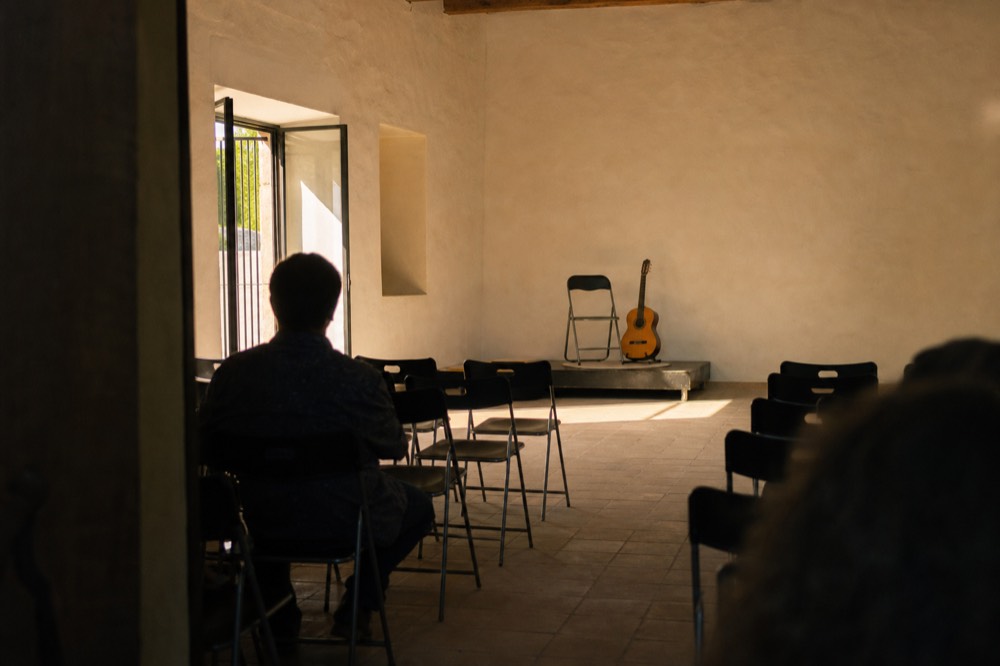
When does free flamenco spill into the streets?
During the two festival weeks and the September festival. Semana Santa runs 29 March to 5 April in 2026 and Feria de Abril follows on 21 to 26 April, both free to watch and both enormous. The XXIV Bienal de Flamenco returns to Seville in September 2026, with dates 9 September to 3 October.
These weeks change the city rather than adding to it. During Holy Week the processions own the streets and the crowds are the event; during the fair the fairground fills with music, dancing and horses. Both are free in the sense that walking around costs nothing, and both are the reason a lot of travellers first hear live Spanish music outdoors. Neither is a tablao programme, and expecting one is the most common mistake in this whole subject.
The Bienal is the opposite case: a serious, programmed flamenco festival rather than a street event, and the one thing on this site allowed to carry event dates is the dedicated post on the 2026 Bienal. The official announcement from the festival organisers confirms the festival from 9 September to 3 October 2026; use its programme to choose each performance.
There is a practical trap in all three. Festival weeks fill the city, and the ticketed rooms fill with it. Andalusia recorded roughly 14.5 million international arrivals in 2025, up six percent on 2024 and twenty-two percent on 2019, so the crowd competing for a seat is bigger than most older guidebooks assume. If your trip lands on one of these dates, book the room first and treat the free spectacle as the bonus.
| 2026 date | What it is | Free to watch |
|---|---|---|
| 29 March to 5 April | Semana Santa, Palm Sunday to Easter Sunday | Yes, processions in the street |
| 20 April evening | Cena de pescaito, night before the fair opens | Fair grounds, varies |
| 21 to 26 April | Feria de Abril, closing fireworks at midnight on the 26th | Grounds free, many casetas private |
| September 2026 | XXIV Bienal de Flamenco, dates 9 September to 3 October | No, programmed and ticketed |
What does free flamenco actually cost you?
Time, certainty and sound quality. A free set costs an hour of early arrival for thirty minutes of music you cannot preview, in a room where the bar competes with the singer. Priced at any reasonable value of an evening on holiday, that is not cheaper than a $24 ticket. It is a different purchase.
Break the evening into its parts and the arithmetic gets clear. Arriving before 7:20 pm to hold a seat, then waiting for a set that starts somewhere between 7:00 and 8:30, is ninety minutes of your evening committed before anything happens. Two or three drinks at bar prices follow, and around them the usual Seville spend: tapas run 3 to 5 euros a dish, a menú del día lands between 13 and 17 euros. Seville charges no tourist tax as of 2026, so nothing else is bolted on.
Against that, local show-only tablao tickets sit around 20 to 25 euros and usually include a drink, and the listings on this site start at $24. The gap between a free night and a ticketed night is smaller than the word free suggests, and what closes it is not money. It is that the ticket converts an uncertain evening into a fixed one.
The second cost is harder to price and matters more. Flamenco's power depends on being able to hear it. The unamplified rooms exist because a voice carrying across a stone courtyard does something a microphone cannot fake, and a bar full of conversation removes exactly that. Nobody who came to Seville for cante jondo should spend their only evening standing at the back of a busy room.
| What free costs | Typical scale | What a ticket removes |
|---|---|---|
| Early arrival for a seat | About 60 to 90 minutes | Seat included, doors 20 to 30 minutes before |
| Uncertainty about the line-up | Total, nothing published | Artist counts stated on every listing |
| Competing noise | Constant in a bar | Unamplified rooms, silence enforced |
| Set length | About 30 minutes | 60 to 90 minutes |
| Drinks spend | Two or three rounds | Often one drink included |
| Risk of a wasted evening | Real | Free cancellation up to 24 hours out |
The third cost is the one nobody mentions: what a disappointing free night does to the rest of the trip. Travellers who spend their flamenco evening at the back of a loud bar tend to leave Seville having decided the art form is overrated, when what they actually experienced was bad acoustics. That is a poor souvenir from a city where an hour in a quiet courtyard costs less than a mid-range dinner for one.
How cheap is the paid floor, really?
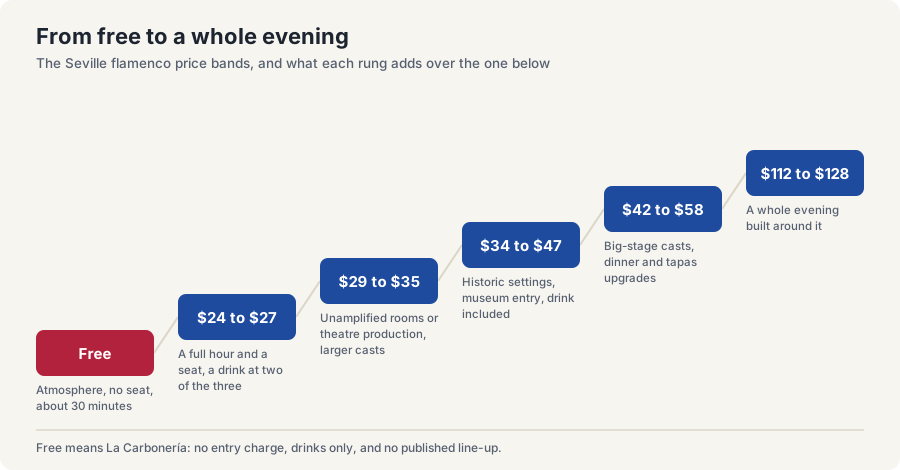
Cheaper than most travellers expect. The entry point is $24 for an hour at Casa de la Guitarra, with Orillas de Triana at $26 and Baraka at $27, with a drink included at Baraka. Under $30 you also reach Casa de la Memoria, La Casa del Flamenco and the theatre production with nearly 20,000 reviews behind it.
That price band is the single most useful fact on this page. It means the real choice is rarely free against expensive; it is free against roughly the cost of two rounds and a plate of jamón. The dearer end of the market exists for a reason, with dinner packages and rooftop productions running to $128, but nobody needs to start there to see excellent flamenco.
Within the cheap band the differences are about room and format rather than quality. The unamplified rooms trade production for proximity: four or five artists, no microphones, a courtyard that does the work. The theatre production trades intimacy for scale and reliability, with several curtains a night and by far the largest review base in the city. The compact Triana rooms give you a drink, a small room and a riverside walk afterwards, and they sit in the neighbourhood covered by the Triana flamenco guide.
If the budget is the whole issue, start at the bottom of the ladder rather than skipping the ladder. Orillas de Triana offers a show-only ticket, so check what a seat there costs tonight before you decide that free is the only affordable option.
Two more things are worth knowing before you sort by price. First, a low price does not mean a small room: the theatre production near the centre sits at the same $29 as the palace rooms and carries 19,771 reviews at 4.7, which is the largest verified feedback base in the city by an enormous margin. If a big, reliable, several-curtains-a-night option suits your schedule better than a forty-seat courtyard, see which curtain still has seats and use a free walk as your late stop while La Carbonería remains closed. Second, review volume and rating pull in different directions at the cheap end. The compact rooms grouped on the intimate flamenco rooms hub post the highest averages on this site, including a 4.9 across 769 reviews, while the four-artist palace rooms in the classic tablao lineup trade a fraction of a rating point for a longer track record.
| Tier | Price from | What it adds |
|---|---|---|
| Free | 0 | Atmosphere, no seat, about 30 minutes |
| $24 to $27 | Casa de la Guitarra, Orillas de Triana, Baraka | A full hour, a seat, a drink at Baraka |
| $29 to $35 | Casa de la Memoria, La Casa del Flamenco, Teatro Flamenco Sevilla, Pura Esencia | Unamplified rooms or theatre production, larger casts |
| $34 to $47 | Museum courtyard, the Almohad vault show | Historic settings, museum entry, drink included |
| $42 to $58 | El Palacio Andaluz, Tablao El Arenal | Big-stage casts, dinner and tapas upgrades |
| $112 to $128 | Tapas tour with a show, rooftop dinner package | A whole evening built around it |
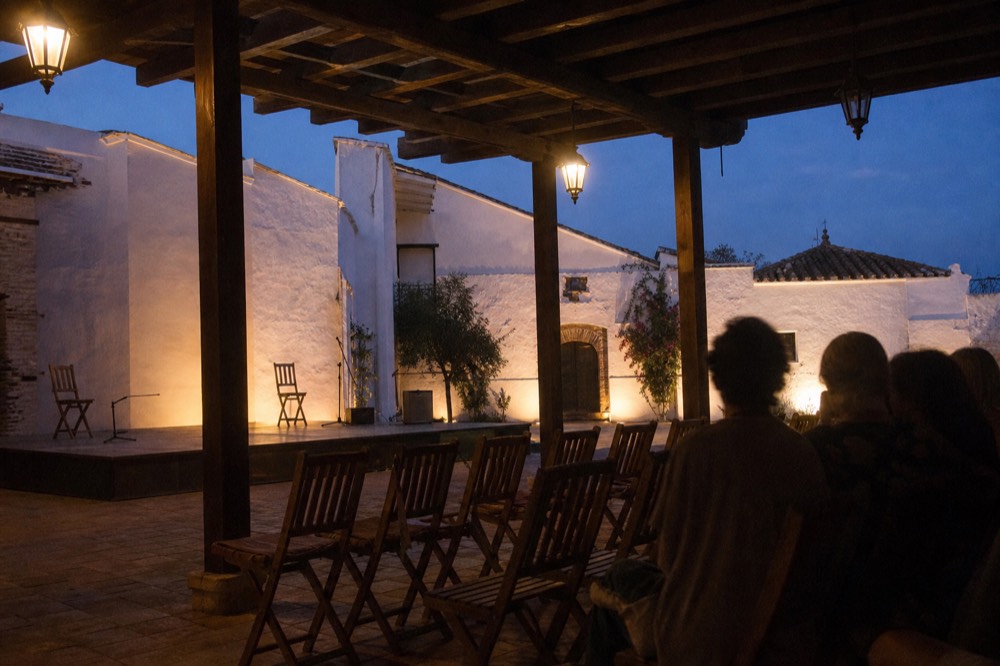
How do you build an evening that uses both?
While La Carbonería is closed, combine a ticketed set with a free walk or a separately confirmed public performance. After reopening, the old sequence would be an early ticketed set, dinner, then an optional bar stop. Ticketed sets start from 18:00, kitchens fill from 21:00, and the bar runs late. That order gives you a guaranteed hour of flamenco and a free second helping, in the only sequence where a flat free set cannot spoil the night.
The reverse order is where travellers get burned. Committing to a 7:00 pm arrival at the bar removes every early ticketed slot from the board, and if the set is short or the room is loud, the remaining options are the 21:00 and 22:30 starts, competing directly with dinner. On a three-night trip that is fine. On a two-night trip it is the difference between hearing flamenco properly and not.
Distance is not the constraint people expect. The Santa Cruz rooms, the free bar and the theatre venues all sit inside the same central walking radius, and the Triana rooms are one bridge away. Those lanes are also the part of the old town that repays daylight, so a guided wander through Santa Cruz slots in ahead of an early curtain rather than competing with it, and you can see times and prices here. What constrains the evening is the clock: the metro stops around 11:00 pm from Monday to Thursday, running to about 2:00 am on Friday and Saturday, while trams run later and taxis and app cars work around the clock.
One last piece of sequencing advice. If you are still unsure whether any of this is for you, the question of whether flamenco is worth seeing at all gets an honest answer elsewhere on this site, and the short version is that the format matters more than the price. A cheap seat in a quiet room converts sceptics. A free set at the back of a noisy bar rarely does.
| Evening slot | Doing it well | Doing it badly |
|---|---|---|
| 18:00 to 19:00 | Early ticketed set, seated | Waiting for a bar to open |
| 19:30 to 20:30 | Walk, drink, free bar set | Nothing booked, hoping |
| 21:00 to 22:30 | Local dinner hour, tapas bars busy | Scrambling for a late ticket |
| 22:30 to 23:00 | Second free set or last curtain | Missing the metro home |
| Total flamenco heard | 90 minutes or more | 30 minutes, maybe |
Frequently asked questions
Can you really see flamenco in Seville without paying?
Free possibilities include public performances and events open to visitors. La Carbonería announced a temporary closure on 3 June 2026, so its former free-entry evenings are not a current plan. Check any event’s current programme before travelling.
Which free option is the most reliable?
No free option guarantees a nightly performance. La Carbonería is temporarily closed; look for a current public-event programme or a peña recital explicitly open to visitors. The venue guide explains its former format and closure.
Are peñas open to tourists?
Occasionally. Peñas are membership clubs with their own calendars, announced locally and usually in Spanish, and some evenings are members-only. Quality is high when you get in, but it is not something you can plan a trip around. Visitors chasing that seriousness are better served by a room that publishes what it does.
How much does a paid flamenco ticket cost in Seville?
The floor on this site is $24 for an hour at Casa de la Guitarra, then $26 at Orillas de Triana and $27 at Baraka, with a drink included at Baraka. Local show-only tablao prices sit around 20 to 25 euros. Dinner packages run much higher, up to $128 for a rooftop evening. Cancellation depends on the selected ticket and its stated deadline.
Is there free flamenco during Feria or Semana Santa?
There is free spectacle, which is not the same thing. Semana Santa runs 29 March to 5 April in 2026 and Feria de Abril 21 to 26 April, both free to watch in the street. Neither delivers a seated tablao performance, and both fill the city, so book any ticketed room well ahead if your trip overlaps.
Is a free set good enough if flamenco is why you came to Seville?
No. Thirty minutes over bar noise, with no idea who is playing, is a poor way to meet an art form inscribed on the UNESCO intangible heritage list in 2010. Do both if you have the nights: one ticketed hour for the music, one free set for the atmosphere.
Build Your Flamenco Evening
Check Your Date Before Planning Dinner
Compare Options And Refine Your Choice
Hear guitar, song and dance, then look at the historic guitar collection. Show and guitar collection. Food and drinks are not offered.
Four artists perform without microphones in an intimate palace room. Show admission; no food or drink. Seats assigned by the box office; arrive at least 20 minutes early.
Settle into a one-hour Triana performance with a drink included. Ages 4+. Meet at Calle Pureza 107; hotel transport is not included.
Compare Your Actual Evening Costs
Enter two complete quotes in the same currency for the same party. Include the show, food, drinks and transport you would buy. These are your estimates, not provider prices.
No option in this shortlist meets all those choices. Adjust your time, preference or eligibility filters, or reset to the general recommendation.
General recommendation; confirm the ticket option and guest requirements.
Casa De La Guitarra
Hear guitar, song and dance, then look at the historic guitar collection. Check your date before arranging the rest of the evening.
Show and guitar collection. Food and drinks are not offered.
Scheduled departures from Viator. Availability and final price are confirmed on Viator.