Flamenco in Triana: the barrio that made it, and the four rooms still doing it
Cross one bridge and the flamenco changes shape. Triana's rooms are smaller, cheaper and closer to the floor than the ones in the old centre, and the barrio behind them is the reason the art form exists in the first place.
 By Carmen Ruiz, Seville flamenco show specialist & cultural experience guide
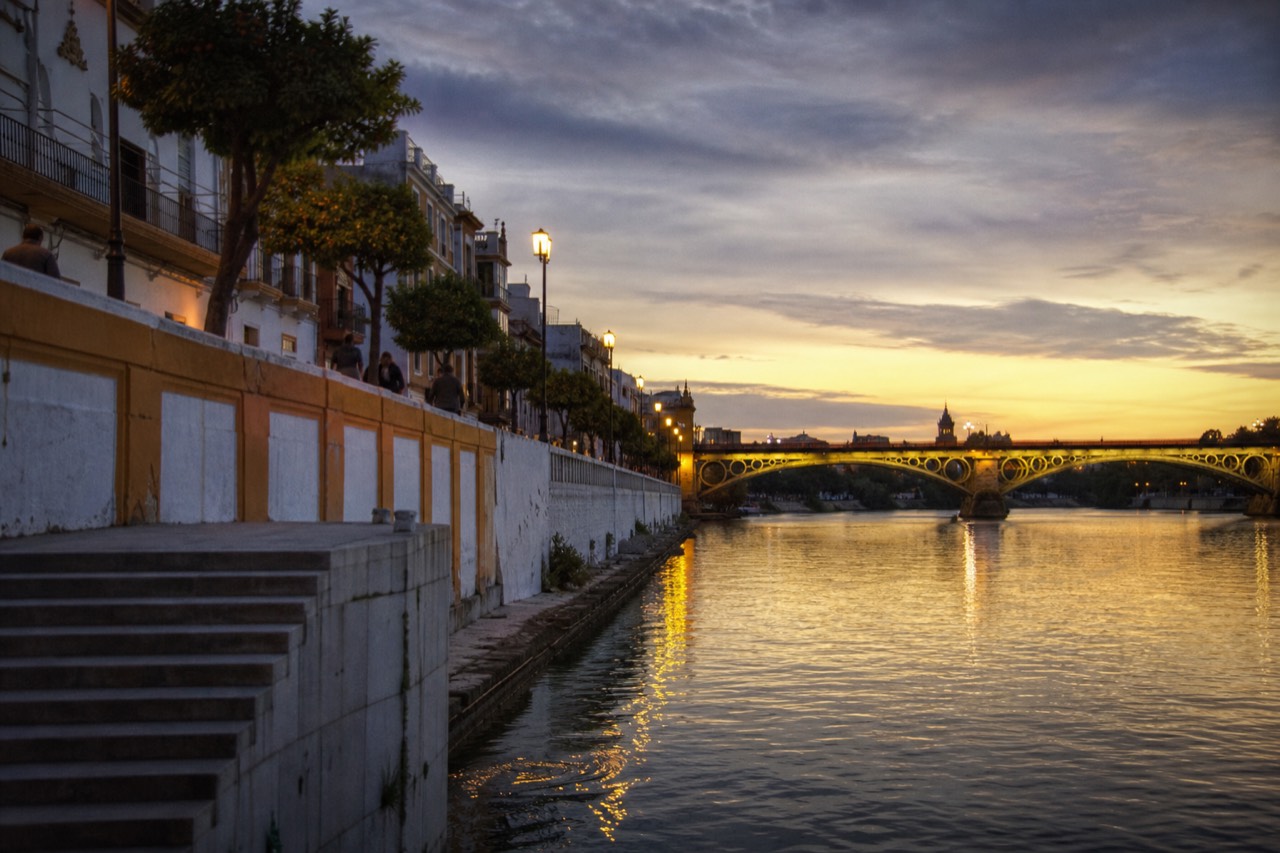
Short answer
Triana is the Seville neighbourhood across the Guadalquivir, historically home to Gitano families, ceramic workshops and generations of flamenco artists. Four bookable rooms sit there today: Teatro Flamenco Triana, Pura Esencia on Calle Betis, Baraka on Calle Pureza and Orillas de Triana. Prices run $26 to $35, all one-hour sets.
The Guadalquivir does something unusual for a river running through a European city. It separates two entirely different attitudes to the same art form. On the old-town side, flamenco is staged in fifteenth-century courtyards and theatre spaces for audiences who bought tickets weeks ago. On the Triana side, it is performed in rooms with forty chairs, a bar at the back, and a river walk outside where people are eating at ten at night. Both are real. Only one of them is the neighbourhood the singers came from.
Prices and review counts in the comparisons are snapshots, not live quotes. Compare the same travel date, currency and ticket tier before paying.
Why is Triana famous?
Triana is the working-class barrio on the west bank of the Guadalquivir, historically home to Gitano families, sailors and the ceramic workshops whose tiles cover half of Seville. Its reputation rests on what came out of it: generations of flamenco singers, dancers and guitarists, and a claim to be one of the art form's founding neighbourhoods.
The barrio's identity was built on three trades. Pottery and tile-making ran along the riverfront, sailors and dockworkers filled the streets behind, and the Gitano community that settled there over centuries supplied the third strand. Flamenco developed primarily within Gitano communities in Andalusia from the fifteenth century onward, and Triana was one of the places where that happened at close quarters with everything else the barrio was doing.
What is easy to overstate is exclusivity. Flamenco is not a Triana invention alone: current scholarship describes it as a hybrid, with Romani musical traditions carrying North Indian scales and rhythms, layered over Andalusian folk forms, Arab-Andalusian music from the eight centuries of Al-Andalus, and Sephardic Jewish influences. Triana's claim is not that it made all of that. It is that it was one of the places where the mixture became a repertoire, and that it kept producing artists long after the barrio's original families had been scattered.
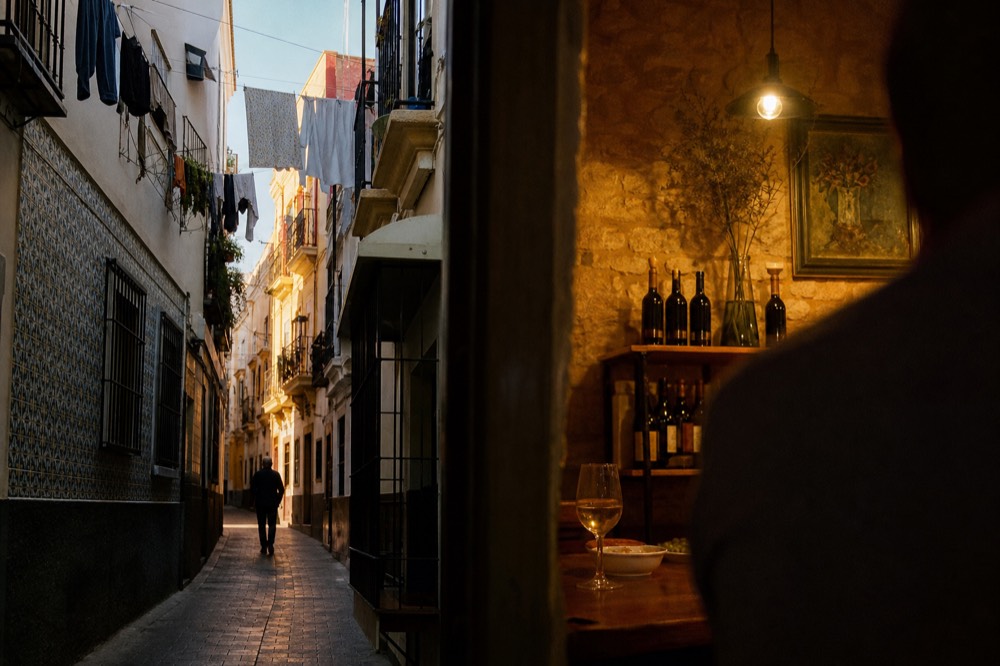
The other half of the fame is atmospheric rather than historical. Triana looks like the flamenco postcard: tiled facades, the iron bridge, the river, bars that stay open. That combination is why the barrio ended up with four bookable rooms of its own rather than being a day-trip from the tablao district. The art form's status was formalised when flamenco entered the UNESCO Representative List of the Intangible Cultural Heritage of Humanity in 2010, and neighbourhoods like this one are precisely what that listing means by living practice.
| Triana in short | Detail |
|---|---|
| Where | West bank of the Guadalquivir, across from central Seville |
| Historic trades | Ceramics and tile work, river and dock work |
| Flamenco link | Longstanding Gitano community, generations of artists |
| Bookable rooms today | Four, all one-hour sets |
| Price range | $26 to $35 |
| Signature streets | Calle Betis on the river, Calle Pureza one block back |
What makes Triana's flamenco different from the tablaos in the centre?
Scale and price. The Triana rooms are small, run about an hour, and start at $26 with a drink included at three of the four. The central venues cover the whole range instead: unamplified palace courtyards, a theatre production with nearly 20,000 reviews, big-stage dinner shows with up to fifteen performers. Triana trades variety for proximity.
The clearest way to see the difference is by cast size. Across the river, Tablao El Arenal can put up to fifteen performers on stage for seventy-five minutes, and El Palacio Andaluz runs a ninety-minute production with a dozen-plus artists and full dinner tiers. In Triana, the standard shape is four artists: a guitarist, a singer and two dancers, or a variation on that quartet, for sixty minutes.
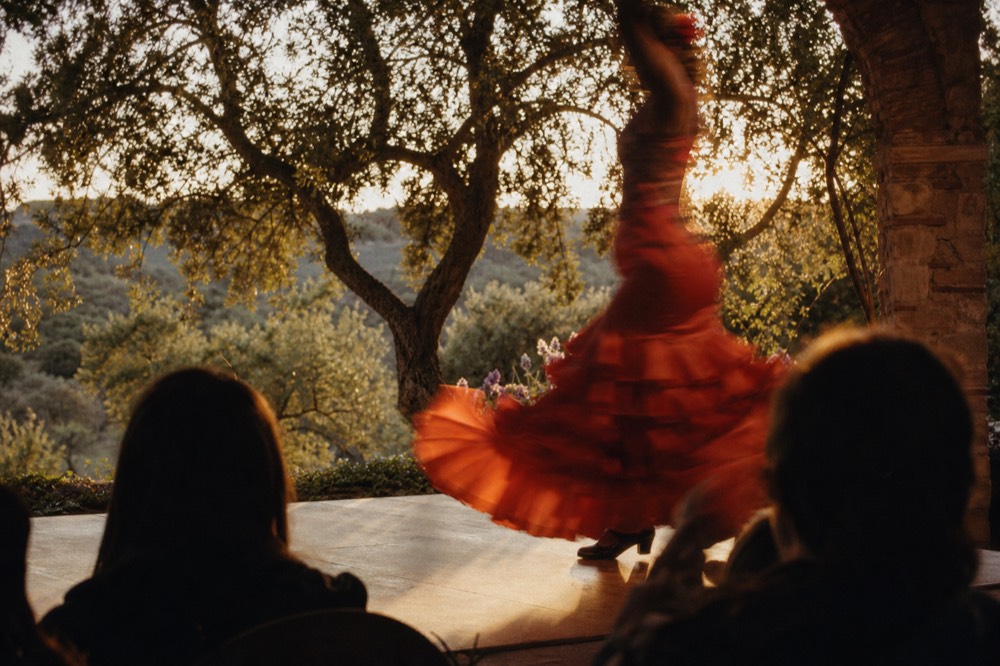
Small casts change what you notice. With four people on a small floor, the footwork is audible as physical impact rather than amplified sound, the singer's breathing is part of the performance, and the guitarist is close enough to watch properly. With fifteen, you get choreography, costume changes and a production arc that a quartet cannot attempt. Neither is more authentic. They are answers to different questions.
Price follows scale. The Triana rooms occupy the bottom half of the ladder at $26 to $35, which puts them alongside the cheapest central options rather than the dinner packages that run to $128. For travellers watching the budget, this is the barrio to be in, and the comparison against the free options is laid out in the free flamenco roundup.
| Triana rooms | Central venues | |
|---|---|---|
| Typical cast | 4 artists | 4 to 15, depending on venue |
| Typical length | 60 minutes | 60 to 90 minutes |
| Price band | $26 to $35 | $24 to $128 |
| Drink included | Three of the four rooms | Varies, common at dinner venues |
| Room size | Small, close to the floor | Courtyards, theatres, large tablaos |
| After the show | River walk, late tapas streets | Old-town streets, cathedral area |
How do you cross the river to Triana?
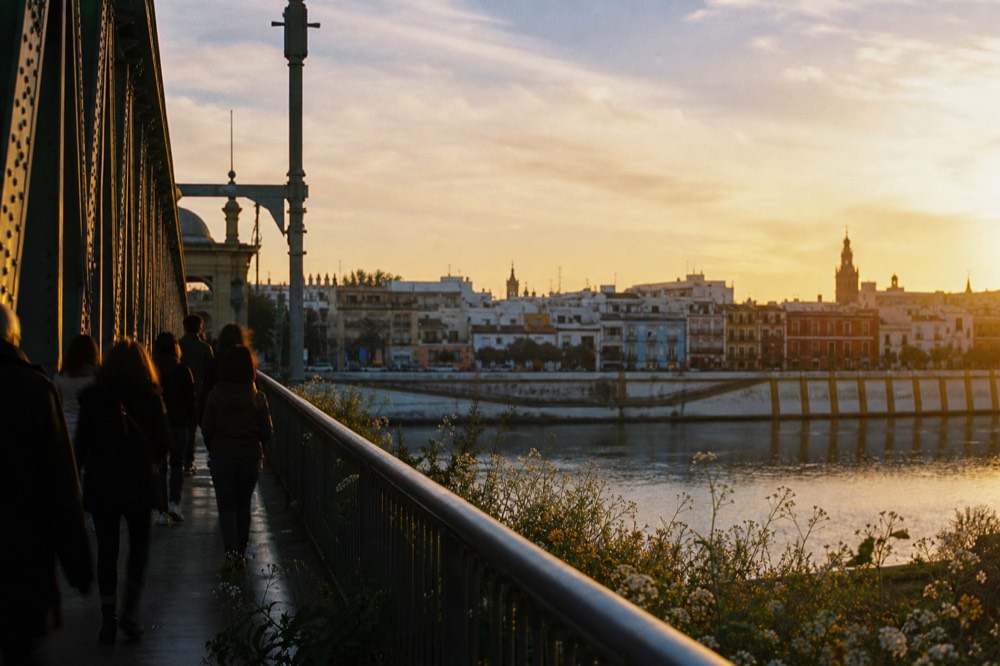
On foot, over the Puente de Isabel II. The old iron bridge is the direct link between the centre and the barrio, it takes a few minutes to walk, and it drops you at the top of the tiled streets where the rooms are. Nothing about a Triana evening requires transport until the walk home, and even then it usually does not.
Distance is the thing most itineraries get wrong in the wrong direction. Travellers treat Triana as a separate excursion and end up either skipping it or dedicating a whole afternoon to it. In practice the bridge is the boundary, and both sides of it are the same city centre. A show at 20:00 in Triana is not a logistical problem for someone staying near the cathedral.
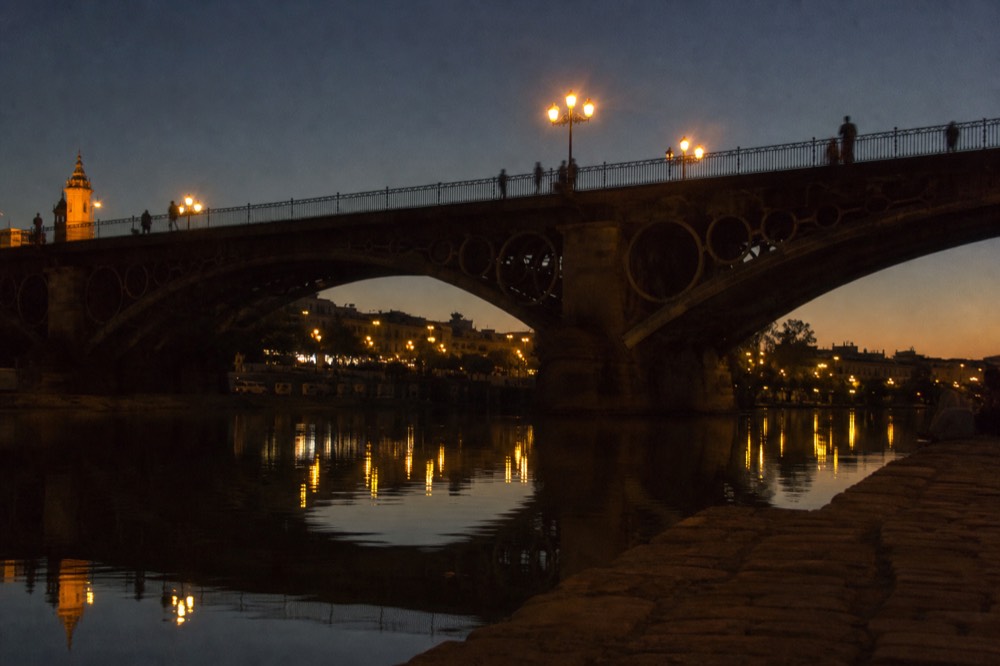
The bridge also sets up the evening properly. Crossing at dusk, with the river below and the tiled quay ahead, is the transition that makes a Triana show feel like a different night out from a Santa Cruz one. Do it slowly and arrive early rather than sprinting across at five to eight. The Mercado de Triana sits right at the foot of the bridge on the barrio side, which is where the guided market-and-tapas rounds tend to begin, and you can check dates and prices here if you would rather have the eating handled before the show.
Coming back is where the clock matters. The metro runs until about 11:00 pm Monday to Thursday and to roughly 2:00 am on Friday and Saturday, the tram runs later, and taxis and app cars operate around the clock. A show ending at 21:00 or 22:00 leaves plenty of margin, which is exactly why the early sets suit visitors who want a proper Spanish dinner afterwards.
| Getting back across | Runs until | Notes |
|---|---|---|
| Walking over the bridge | Any hour | The default, a few minutes on foot |
| Metro | About 11:00 pm Monday to Thursday, roughly 2:00 am Friday and Saturday | Longer hours at weekends and holidays |
| Tram and MetroCentro | About 11:30 pm on quiet days, 1:30 to 2:00 am on busy ones | Central routes only |
| Taxi or app car | 24 hours | Ranks and apps both work late |
Sleeping on the west bank removes the return crossing altogether. Hotel Ribera de Triana is a modern hotel on the Triana side near the bridges, which puts the four flamenco rooms, the tapas streets and the river walk on the same side of the water as your bed.
Hotel Ribera de Triana Check rates ›
Which flamenco rooms are actually in Triana?
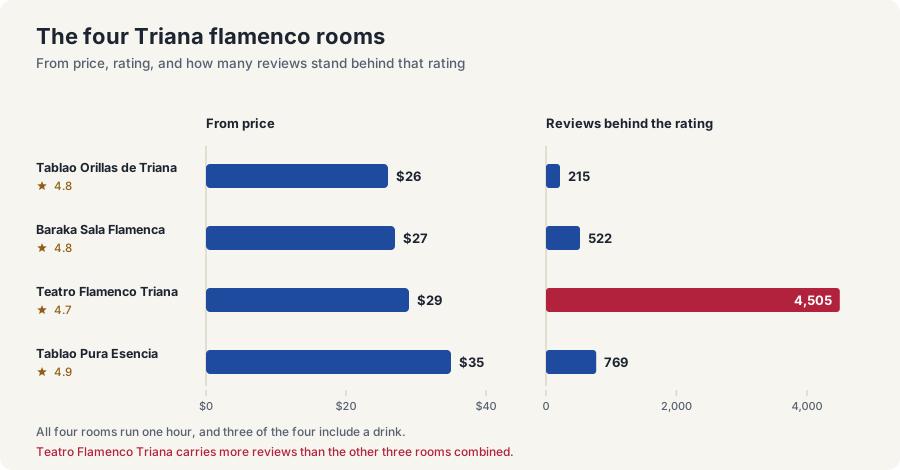
Four: Teatro Flamenco Triana, the foundation-run theatre whose profits fund flamenco teaching; Pura Esencia on Calle Betis, the highest-rated regular room on this site at 4.9; Baraka on Calle Pureza, four artists with a drink included at $27; and Orillas de Triana, the compact classic-quartet room at $26.
Teatro Flamenco Triana is the outlier of the group and the one worth understanding first. It is a project of the Cristina Heeren Flamenco Art Foundation, and every euro of profit goes into teaching the art form. It runs a strict no-photography hour, takes no under-sixes, and carries 4,505 reviews at 4.7. For anyone who dislikes the idea of flamenco as a tourist commodity, the money going back into training is a genuine answer, and the current schedule and price sit on the venue's listing.
Pura Esencia is the rating leader: 4.9 across 769 reviews, an hour with a guitarist, a singer and two dancers, a drink included and skip-the-line entry, on the riverside stretch of Calle Betis. Baraka, in the Sala Lola de los Reyes on Calle Pureza, runs four artists for an hour at $27 with a drink, and sets its age floor at four. Orillas de Triana is the cheapest of the group at $26, a compact room with a classic quartet, and its schedules continue to appear on 2026 listings.
The practical difference between them is small and worth stating plainly. All four run about an hour. Three include a drink. The rating spread across the four is narrow, from 4.7 to 4.9, and the review bases run from 215 to 4,505, so any of them is a defensible choice. What separates them is the room, the age policy and how much you care about where the money goes.
| Triana room | Length | Cast | Drink | Age policy | From | Rating |
|---|---|---|---|---|---|---|
| Teatro Flamenco Triana | 1 hour | Foundation company | No | No under-6s | $29 | 4.7 across 4,505 |
| Pura Esencia | 1 hour | Guitarist, singer, 2 dancers | Yes | Not stated | $35 | 4.9 across 769 |
| Baraka Sala Flamenca | 1 hour | 4 artists | Yes | No under-4s | $27 | 4.8 across 522 |
| Orillas de Triana | 1 hour | Classic quartet | No | Not stated | $26 | 4.8 across 215 |
Which Triana room fits which traveller?
Choose by constraint rather than by rating, because the ratings are all high. Take Teatro Flamenco Triana if you want the money to fund teaching and do not mind a no-photos rule, Pura Esencia if you want the strongest average and a river-side location, Baraka if you have a young child, and Orillas de Triana if price is the deciding factor.
Families are the group with the least room to manoeuvre. Baraka sets its floor at four years old, which is the most permissive policy among the Triana rooms and one of the more permissive in the city. Teatro Flamenco Triana takes no under-sixes at all, and across the river the palace rooms at Casa de la Memoria and La Casa del Flamenco both say the hour is not recommended below six. A family with a five-year-old has exactly one comfortable Triana option.
Photographers and phone-users should read the rules before booking rather than after. The foundation theatre enforces a strict no-photography hour, which many visitors consider the best thing about it and a few find intolerable. The smaller rooms are generally more relaxed, but the same etiquette applies everywhere: professional palmeros carry the compás, and audience clapping along in a formal room throws the dancers off. If you want the vocabulary before you go, the question of what audiences shout during flamenco has a short and useful answer.
Budget travellers should note where the drink sits. At the illustrative $26 show-only price, Orillas de Triana is effectively the cheapest full hour in the barrio, and Baraka at $27 is within a rounding error. The gap to Pura Esencia at $35 buys the highest average rating on the site and the Calle Betis location, which for a couple planning one flamenco night is usually worth the difference.
| Your situation | Pick | Why |
|---|---|---|
| Travelling with a four or five-year-old | Baraka | Age floor at four, drink included |
| Want the profits to fund the art form | Teatro Flamenco Triana | Foundation project, teaching funded |
| Want the strongest rating on the site | Pura Esencia | 4.9 across 769, skip-the-line |
| Lowest price for a full hour | Orillas de Triana | $26 show-only snapshot |
| Hate phones at performances | Teatro Flamenco Triana | Strict no-photography hour |
| Want the river outside the door | Pura Esencia | Calle Betis, riverside stretch |
Two options outside the barrio are worth weighing before you commit. The free bar in the old centre runs half-hour sets at no charge, which suits a second night rather than a first, and the honest account of what that costs in queueing sits on the page for the coal-yard bar. The Dance Museum, also on the old-town side, runs its shows in an eighteenth-century courtyard and a twelfth-century vault, covered in the Dance Museum walkthrough. Neither replaces a Triana room. Both make a good second evening, and travellers with three nights in Seville tend to end up doing one of each.
Where do you eat around a show in Triana?
On Calle Betis and the streets behind it, and later than you think. Seville kitchens generally open around 8:00 to 8:30 pm and locals rarely sit down before 9:00. Tapas run 3 to 5 euros a dish and a menú del día costs 13 to 17 euros, so an early show followed by a proper dinner is both the local rhythm and the cheaper option.
The mismatch between show times and dinner times is the single most useful piece of planning information for a Triana evening. Flamenco starts early here, commonly between 18:00 and 20:30. Dinner starts late, between 21:00 and 23:00. That is not a conflict, it is a sequence, and the barrio is built for it: the rooms are minutes from the tapas streets, and the bars are filling exactly as the shows let out.
Going the other way around is the trap. Sitting down to eat at 20:00, the way most northern European or American visitors want to, puts you in a half-empty restaurant serving an early-tourist rhythm, and then leaves you rushing to a 21:00 or 22:00 show on a full stomach. The food is better and cheaper an hour later, with a better room around it.
For travellers who would rather have both organised for them, there is a four-hour option that starts at the Monumento al Arte Flamenco in Triana, works through real bars with tapas rounds and four drinks, and finishes in a show seat with a group capped at twelve. It carries the highest rating of any listing here at 4.9. If the idea of finding your own bar in a language you do not speak is the part you dread, check what the tapas-and-show evening includes before assembling one yourself.
| Eating around a Triana show | Typical cost | Timing |
|---|---|---|
| Tapas, per dish | 3 to 5 euros | Bars busy from 21:00 |
| Menú del día | 13 to 17 euros | Lunch service, not evening |
| Restaurant kitchens open | Varies | Around 20:00 to 20:30 |
| Local dinner hour | Varies | 21:00 to 23:00 |
| Show plus tapas as a package | $112 | 4 hours, capped at 12 people |
| Tourist tax | None in Seville | Not charged as of 2026 |
What actually happened to Triana's flamenco families?
They were pushed around by history rather than silenced by one decree. The documented state persecution of the Gitano community is old: the 1749 Great Gypsy Round-up under Ferdinand VI imprisoned or forcibly relocated thousands of Gitanos as part of the Pragmática assimilation laws. The popular story that Franco banned flamenco does not survive checking.
Take the myth first, because it is repeated in half the flamenco writing online. Under Franco, from 1939 to 1975, there was no blanket ban on flamenco. The regime promoted it as a national symbol and a tourist attraction, particularly after the Second World War when foreign currency mattered, while censoring lyrics and artists it considered subversive or too visibly Arab or Jewish in influence. Public performance did thin out in the 1930s and 1940s, but the cause was the Civil War and postwar austerity rather than a prohibition. The fuller version of that argument sits in the post on why people say flamenco was banned.
The real persecution story is two centuries older and much harsher. The 1749 round-up was a coordinated operation across Spain aimed at assimilation or expulsion, and it fell on exactly the communities that carried the music. Whatever continuity Triana has with the flamenco of that era survived that, not a twentieth-century decree.
What the barrio lost in the twentieth century it lost mostly to ordinary urban change: families moved, workshops closed, riverside property became valuable. The four rooms operating today are not a survival of an unbroken lineage and none of them claims to be. They are the current professional layer of a neighbourhood that has been supplying flamenco artists for a very long time, and that distinction is worth holding onto when a venue's marketing gets misty.
| Period | What is documented |
|---|---|
| 15th century onward | Flamenco develops within Gitano communities in Andalusia, blending Romani, Andalusian, Arab-Andalusian and Sephardic elements |
| 1749 | Great Gypsy Round-up under Ferdinand VI, mass imprisonment and relocation under the Pragmática laws |
| 1930s to 1940s | Public performance thins out during the Civil War and postwar austerity |
| 1939 to 1975 | No blanket ban; the regime promotes flamenco for tourism while censoring lyrics and artists it deems subversive |
| 2010 | Flamenco inscribed on the UNESCO Representative List of the Intangible Cultural Heritage of Humanity |
What does a Triana evening look like, hour by hour?
Cross the bridge around 18:30, take a 19:00 or 20:00 show, then eat when the barrio does, from 21:00. That order matches the city's own clock, keeps the tapas bars at their best, and leaves the walk back over the river as the last thing you do rather than a rush for the last tram.
Timing the season matters as much as timing the evening. Seville's summer is genuinely severe: the long-term normal high for July is 36.0°C and for August 35.5°C, and 2025 delivered more than thirty days above 40°C with peaks near 44 to 45°C. Those are numbers from the Spanish meteorological agency's climate records, and they explain why a riverside evening in May, June, September or October is a different holiday from the same evening in August. All four Triana rooms are indoors, so the show itself is not the issue. The walk, the bridge and the tapas terrace are.
Winter runs the other way and surprises people. January averages 10.9°C, with a normal high of 16.0°C and a low of 5.7°C, which is mild by northern standards but cool enough that an outdoor table at 22:00 is not the plan. That is the season when the small indoor rooms are at their most appealing and least crowded.
Build in a margin at the start. Rooms this size fill from the door, seating is often first-come inside, and arriving five minutes before a one-hour set in a forty-seat room means taking whatever chair is left. Twenty to thirty minutes early is the standard advice at the central venues and it holds here too.
| Time | Plan |
|---|---|
| 18:30 | Cross the Puente de Isabel II on foot, slowly |
| 18:45 | Drink on Calle Betis, river side |
| 19:30 | Arrive at the room, take a seat near the floor |
| 20:00 to 21:00 | The hour itself |
| 21:00 | Tapas streets fill, kitchens at full service |
| 22:30 | Second drink, or a second short set elsewhere |
| 23:00 | Walk back over the bridge, or a taxi if the metro has stopped |
| Month band | Evening conditions | Verdict |
|---|---|---|
| May to June | Warm, dry, long light | Best of the year for a riverside evening |
| July to August | Normal highs of 36.0°C and 35.5°C, 2025 saw 30-plus days above 40°C | Indoors until well after sunset |
| September to October | Cooling, still warm at night | The other sweet spot |
| November to February | January averages 10.9°C, high 16.0°C, low 5.7°C | Mild days, cool nights, small rooms shine |
Frequently asked questions
Is Triana better than Santa Cruz for flamenco?
Different rather than better. Triana gives you small rooms, four-artist casts and prices from $26, plus the barrio's own history. The central districts give you unamplified palace courtyards, a theatre production with the largest review base in the city, and the big dinner venues. Travellers with two nights often do one of each.
How many flamenco venues are there in Triana?
Four bookable rooms are listed on this site: Teatro Flamenco Triana, Pura Esencia, Baraka Sala Flamenca and Orillas de Triana. All four run about an hour, Baraka and Pura Esencia include a drink, and prices run from $26 to $35. They are grouped with the other small rooms on the intimate flamenco rooms hub.
Can you walk to Triana from the centre of Seville?
Yes. The Puente de Isabel II links the old centre to the barrio and takes a few minutes on foot, which is why a Triana show needs no transport planning. Coming back late, the metro runs until about 11:00 pm Monday to Thursday and roughly 2:00 am on Friday and Saturday, while taxis and app cars run all night.
Which Triana show is best for families?
Baraka, which sets its age floor at four years old and includes a drink at $27. Teatro Flamenco Triana takes no under-sixes. Across the river, Casa de la Memoria and La Casa del Flamenco both say their hour is not recommended below six, and the vault show under the Dance Museum sets its floor at ten.
Was flamenco really banned in Spain?
No blanket ban existed under Franco. The regime promoted flamenco as a national symbol and tourist draw while censoring lyrics and artists it deemed subversive. The documented state persecution is much older and aimed at the Gitano people, above all the 1749 Great Gypsy Round-up under Ferdinand VI.
What time should you arrive for a Triana show?
Twenty to thirty minutes before the start. These rooms are small, seating is often first-come once you are inside, and a late arrival takes whatever is left at the back. Early sets tend to start between 18:00 and 20:30, which leaves the local dinner hour of 21:00 to 23:00 completely free.
Build Your Flamenco Evening
Check Your Date Before Planning Dinner
Compare Options And Refine Your Choice
Hear a guitarist, singer and two dancers in a small Triana room. Show with a welcome drink described in the itinerary; additional drinks extra. Meet at Calle Betis; no transfer. Children accompanied by an adult.
Settle into a one-hour Triana performance with a drink included. Ages 4+. Meet at Calle Pureza 107; hotel transport is not included.
See a foundation-run flamenco performance whose proceeds support teaching. Ages 6+. No bar. Seats follow purchase order; wheelchair users must contact the provider before booking.
Compare Your Actual Evening Costs
Enter two complete quotes in the same currency for the same party. Include the show, food, drinks and transport you would buy. These are your estimates, not provider prices.
No option in this shortlist meets all those choices. Adjust your time, preference or eligibility filters, or reset to the general recommendation.
General recommendation; confirm the ticket option and guest requirements.
Pura Esencia On Calle Betis
Hear a guitarist, singer and two dancers in a small Triana room. Check your date before arranging the rest of the evening.
Show with a welcome drink described in the itinerary; additional drinks extra. Meet at Calle Betis; no transfer. Children accompanied by an adult.
Scheduled departures from Viator. Availability and final price are confirmed on Viator.