Museo del Baile Flamenco: the courtyard, the Almohad vault and the three shows inside
One eighteenth-century house in central Seville holds a museum, a courtyard stage and a twelfth-century brick vault, and each of the three sells a different kind of evening. The trap is booking the wrong one for the time of day you are free.
 By Carmen Ruiz, Seville flamenco show specialist & cultural experience guide
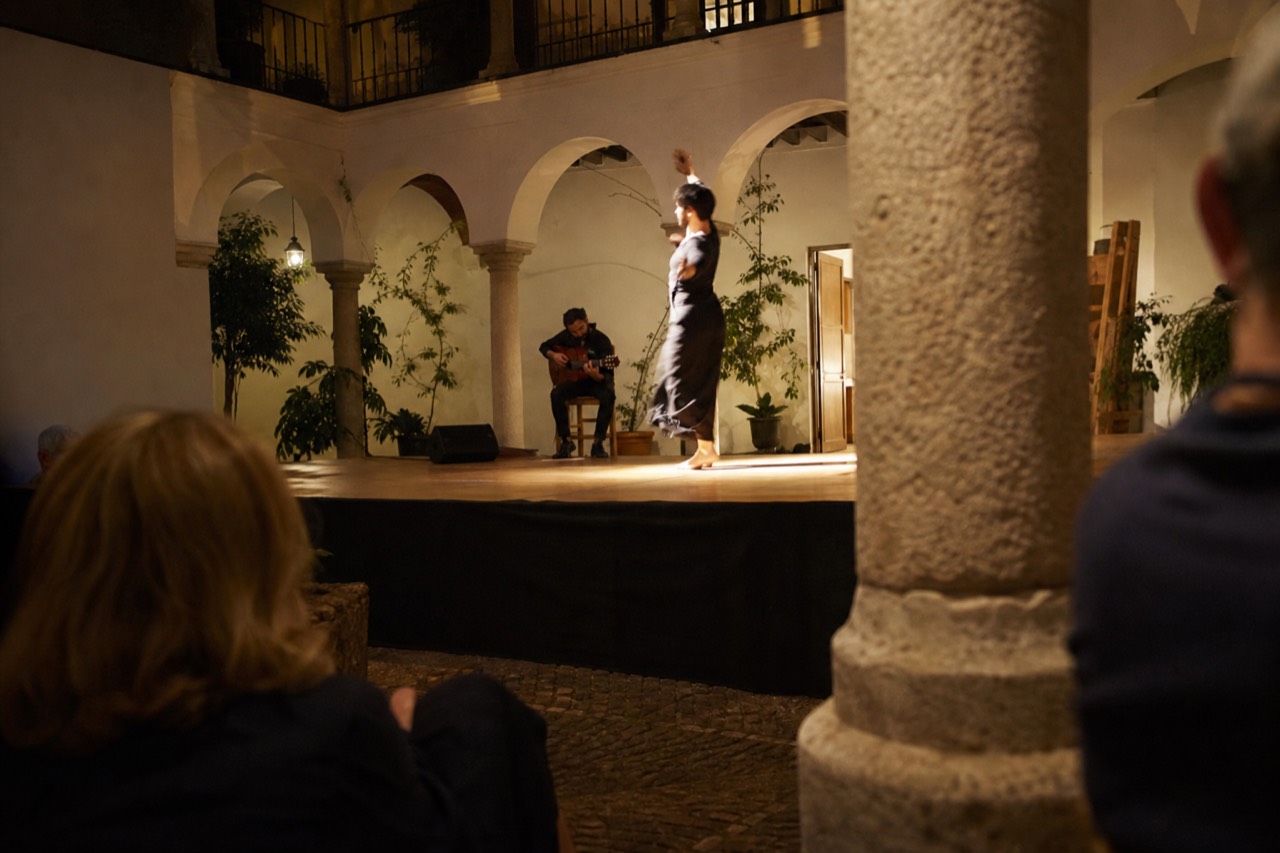
Short answer
The Museo del Baile Flamenco was founded by the bailaora Cristina Hoyos and sits in an eighteenth-century building raised on a Roman temple footprint. It runs a courtyard show with choreography under her direction, a two-row show in a twelfth-century Almohad vault below, and a noon matinee. The museum itself closes around 6 pm.
Most flamenco venues in Seville sell one thing at one time of day. This one sells three, in three different spaces inside the same house, and the differences between them are larger than the prices suggest. Upstairs there is a museum about the dance. In the middle there is a patio with a stage in it. Underneath, reached by stairs, there is a brick vault built when the city was still Muslim, holding two rows of chairs and nothing else.
Prices and review counts in the comparisons are snapshots, not live quotes. Compare the same travel date, currency and ticket tier before paying.
What is the Museo del Baile Flamenco?
It is a museum dedicated to flamenco dance in central Seville, founded by the bailaora and choreographer Cristina Hoyos, which also functions as a working performance venue. The museum runs daily from 10:00 to 18:00 with last entry at 18:00, and the shows begin as it empties, at times such as 17:00, 19:00 and 20:45.
Calling it a museum undersells what happens there after dark, and calling it a tablao undersells the collection upstairs. The building carries exhibits about the dance, its palos and its costume, and then hands the same audience a performance in a courtyard a floor below. For travellers who want context before the art rather than after it, that sequence is the entire argument for choosing this venue over a straight tablao.
The programme splits into three products that people routinely confuse when booking. The courtyard show, sold as Puro Flamenco, is the main evening event, priced from $34 with optional museum entry and carrying 6,781 reviews at 4.8. Flamenco Dreams runs in the Almohad vault below the building, seats two rows, includes a drink and museum access, and costs from $47. The noon matinee is the third, a $29 daytime option with a drink and the museum included.
Those are genuinely different evenings, not tiers of the same one. The rest of this page separates them properly, and the wider comparison against theatre and museum staging sits on the theatre and museum stages hub.
| The three shows | Where | Length | From | Rating |
|---|---|---|---|---|
| Puro Flamenco | Eighteenth-century courtyard | 1 hour | $34 | 4.8 across 6,781 |
| Flamenco Dreams | Twelfth-century Almohad vault | 1 hour | $47 | 4.7 across 38 |
| Matinee | Museum, midday slot | Around 1 hour | $29 | 4.9 across 20 |
Who is Cristina Hoyos, and why does her name matter here?
Cristina Hoyos is one of the most significant bailaoras of the modern era, a choreographer as well as a dancer, and the founder of this museum. The courtyard show is performed with choreography under her direction by the company that carries her name, with six artists on stage including dancers, singers and a guitarist.
The name on the door is doing real work in this case, which is not always true of venues that borrow a famous artist's association. The museum exists because she built it, and the resident company performs her choreography rather than a generic tablao set list. What that means in practice is a show with a designed structure: sequences that were composed rather than assembled, and a cast that rehearses them together.
That is the difference between a choreographed programme and the classic tablao model, where soloists take turns and the running order can shift with the room. Both approaches have long histories and neither is a compromise. A choreographed hour is more consistent night to night; a tablao hour can catch fire in a way a composed piece rarely does.
Her presence also explains why the museum takes teaching and documentation seriously rather than treating the exhibits as a lobby display. Flamenco carries more than fifty traditional palos by common count, of which only fifteen to twenty appear regularly in professional programmes, and a visitor who has never heard the words soleá, alegrías or bulerías has no way to tell one from another during a fast-moving hour. A room that names them before the performance starts is doing something a tablao cannot do between numbers.
Anyone weighing the two should be honest about what they came for. Travellers who want to understand what they are watching tend to prefer the museum route, because the building explains the vocabulary before the performance uses it. Travellers who want the raw, unpredictable end of the art form are better served by the small rooms, including those across the river covered in the Triana neighbourhood guide.
| Courtyard show at a glance | Detail |
|---|---|
| Founded by | Cristina Hoyos, bailaora and choreographer |
| Choreography | Under her direction, performed by her company |
| Cast | 6 artists, dancers with singers and guitar |
| Length | 1 hour |
| Museum entry | Optional add-on |
| Seating | First-come once inside |
| Cancellation | Free up to 24 hours out |
What is the building, and why does it change the show?
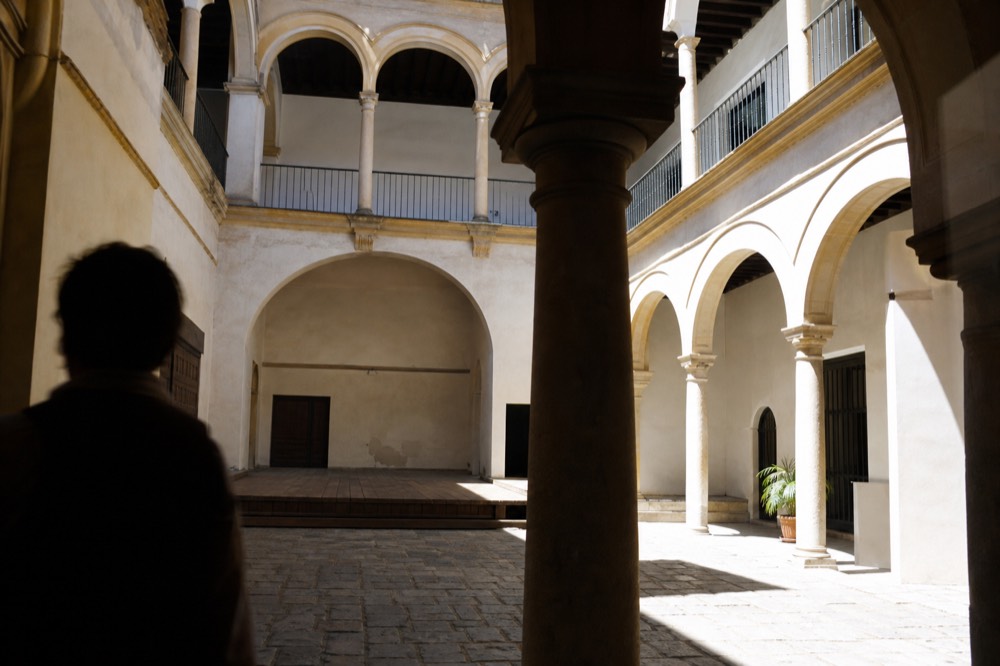
An eighteenth-century townhouse standing on the footprint of a Roman temple, with a twelfth-century Almohad vault surviving underneath. The courtyard performs like an old patio should: hard surfaces, high walls, sound that comes back at you. The vault is smaller, older and much closer, which is why it seats two rows and no more.
Architecture is not decoration in flamenco. Footwork is percussion, and stone and brick return it differently from a modern theatre with acoustic treatment and a raised proscenium. In a patio, the zapateado hits the walls and comes back a fraction later, which is why unamplified rooms in Seville feel physical in a way that a bigger venue with a sound system does not.
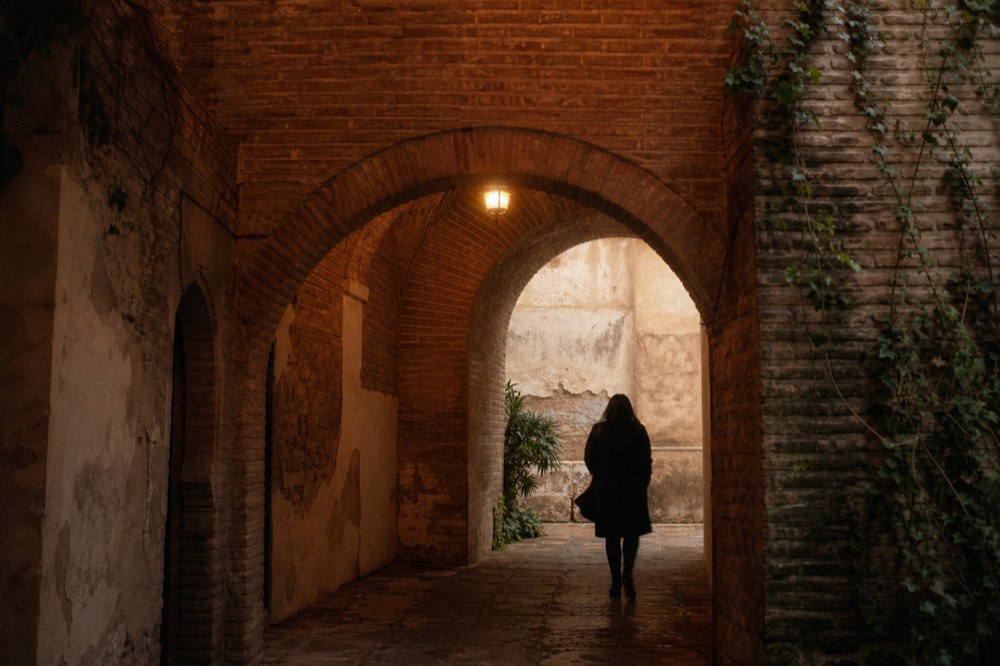
The layering of the building is unusual even by Seville standards. Roman foundations, an Almohad-era vault from the twelfth century, an eighteenth-century house on top: the city's history stacked vertically in one address. Watching a form recognised on the UNESCO Representative List of the Intangible Cultural Heritage of Humanity in 2010, performed in a room built eight hundred years earlier, is the kind of alignment that a purpose-built theatre cannot manufacture.
There is a practical consequence to all of this. Old buildings have stairs, uneven floors and small doorways. Anyone with mobility limits should check access details on the listing before booking, particularly for the vault, which is below ground level.
| Layer of the building | Period | What happens there now |
|---|---|---|
| Roman temple footprint | Antiquity | Foundations only |
| Almohad vault | Twelfth century | Flamenco Dreams, two rows of seats |
| Townhouse and courtyard | Eighteenth century | Puro Flamenco, the main evening show |
| Upper floors | Museum use | Exhibits on the dance, its palos and costume |
What is the Puro Flamenco courtyard show like?
One hour, six artists, in the open patio of the old house, with choreography under Cristina Hoyos's direction. Museum entry is an optional extra rather than a default. Seating is first-come once you are inside, the venue asks people to arrive about thirty minutes early, and the listing carries 6,781 reviews at 4.8.
This is the show most people mean when they say they saw flamenco at the museum. The review base is the second largest of any listing on this site, behind only the big theatre production, which makes the 4.8 average unusually well supported. A high rating on twenty reviews tells you almost nothing. A 4.8 across nearly seven thousand tells you the venue is consistent.
Six artists is a middle-sized cast by Seville standards: bigger than the four-piece quartets of the small rooms, far smaller than the fifteen a big dinner tablao can field. In a courtyard that size, six is the number that fills the space without turning the evening into a production. Expect a designed sequence of palos rather than a loose set, and expect the dancers to be the focus, which is what a dance museum should give you.
The optional museum ticket is the decision people get wrong. Buying show-only and then wanting the museum afterwards does not work, because the museum has closed. Buying the combination and turning up at 20:30 does not work either, for the same reason. If you want both, the museum has to come first, in daylight. When you have settled which of those two evenings you want, check which start times and ticket types are temporarily closed before fixing dinner around it.
What is Flamenco Dreams in the Almohad vault?
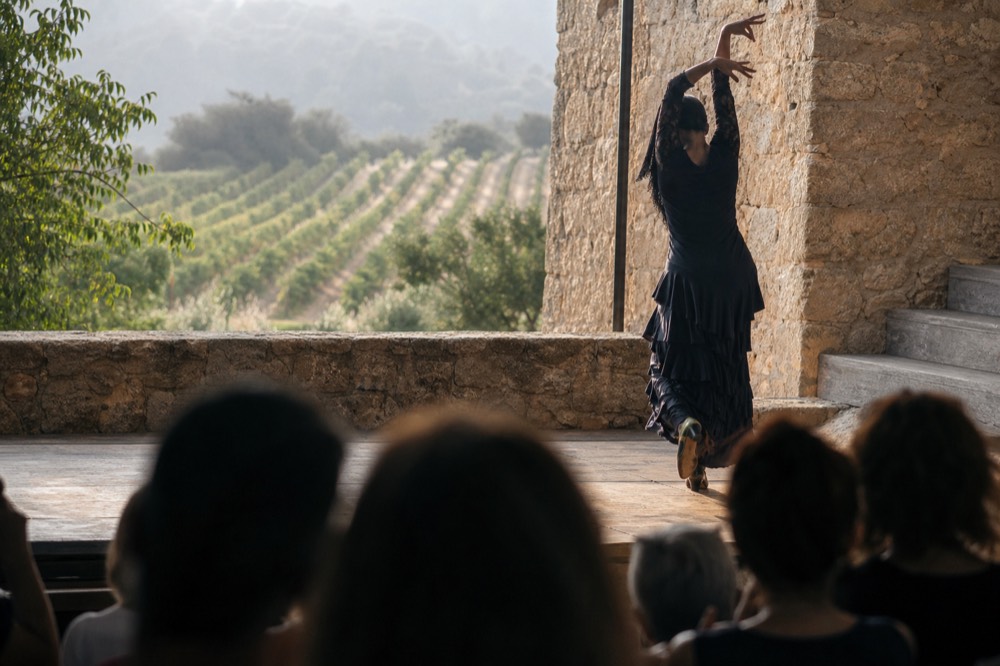
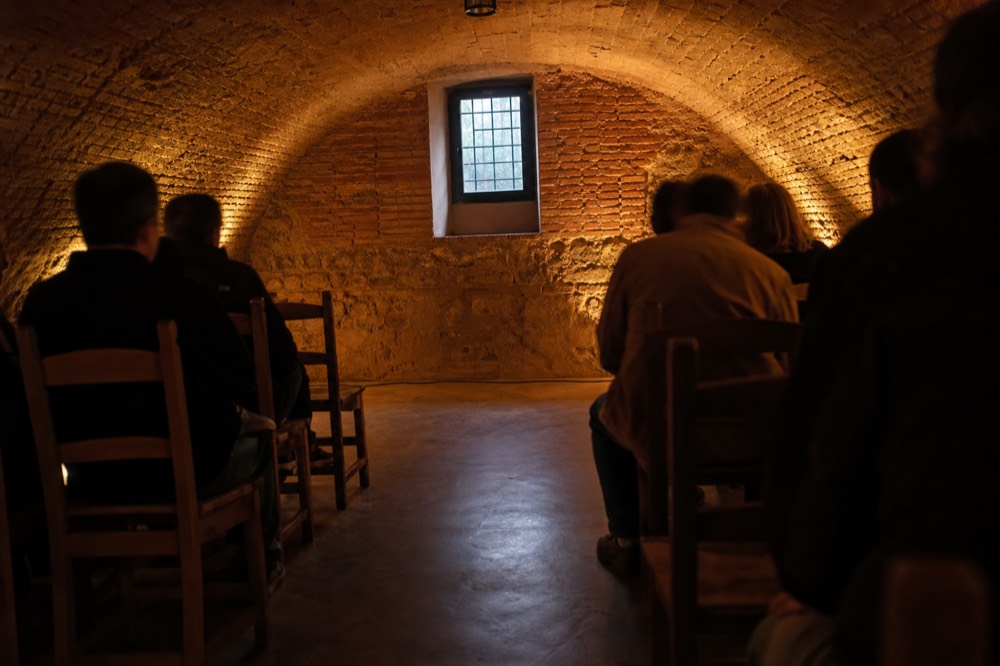
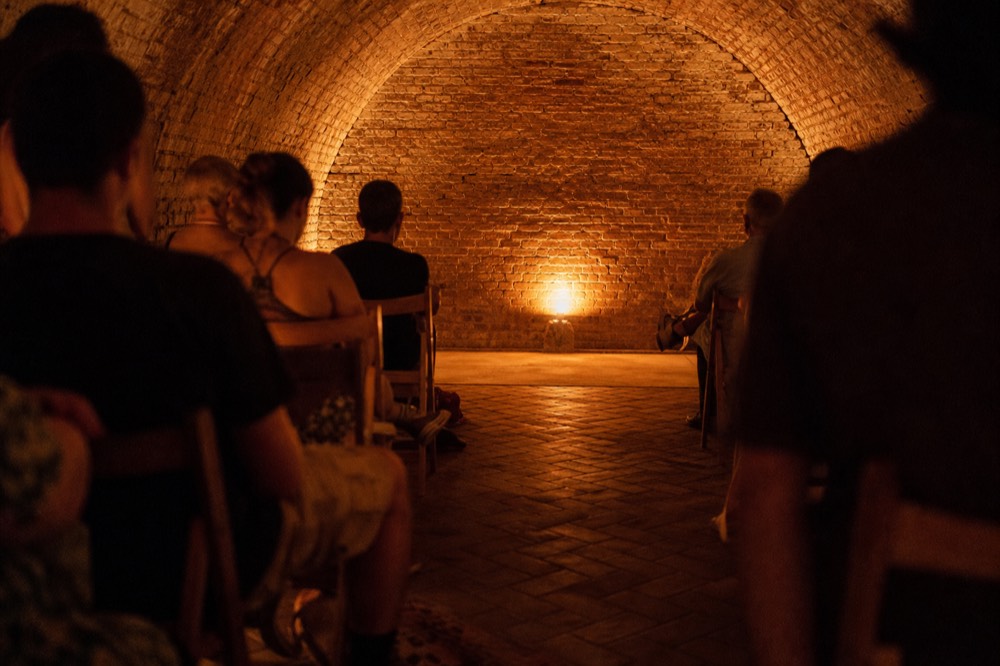
A one-hour show in the twelfth-century brick vault beneath the museum, with only two rows of seats, a drink included and museum access in the ticket, from $47. It is the closest seat to a performer this site lists, and the age floor is ten. The review base is thin at 38, so treat the 4.7 as early rather than settled.
Two rows is the entire proposition. In a room that size there is no back, no sightline problem and nowhere for a performer to hide, which cuts both ways: an outstanding artist is overwhelming at that distance, and an off night has nowhere to go. The vault itself is the other half of the appeal, a piece of Almohad-era Seville that most visitors never see, let alone sit in for an hour.
The inclusions make the price less steep than it first looks. At $47 the ticket carries a drink, cava, wine or a soft option, and museum entry, where the courtyard show sells the museum separately. Someone who wanted both anyway is comparing $47 against the courtyard ticket plus a museum add-on plus a drink bought elsewhere, and the gap narrows considerably.
Honesty about the numbers matters here more than usual. Thirty-eight reviews is a small base for a venue judgement, and this site's policy is to say so rather than to present 4.7 as equivalent to the 4.8 sitting on 6,781 reviews upstairs. The setting is genuinely rare and the format is genuinely intimate. The evidence base is genuinely young. For travellers who value the room over the sample size, see which vault dates still have the two rows open, because a room that small sells out on ordinary nights.
| Courtyard show | Vault show | |
|---|---|---|
| Setting | Eighteenth-century patio | Twelfth-century Almohad vault |
| Capacity feel | Full courtyard audience | Two rows |
| Drink | Not included | Included, cava, wine or soft |
| Museum entry | Optional extra | Included |
| Age floor | Not stated | No under-10s |
| From | $34 | $47 |
| Review base | 6,781 at 4.8 | 38 at 4.7 |
Capacity also changes how you should book. A courtyard absorbs a late booking; two rows do not. When a room holds a couple of dozen people at most, an ordinary Tuesday can sell out weeks ahead in high season, and there is no standing-room fallback. Andalusia counted roughly 14.5 million international arrivals in 2025, six percent up on 2024, which is the pressure sitting behind every small room in the city.
How do museum hours and show times actually fit together?
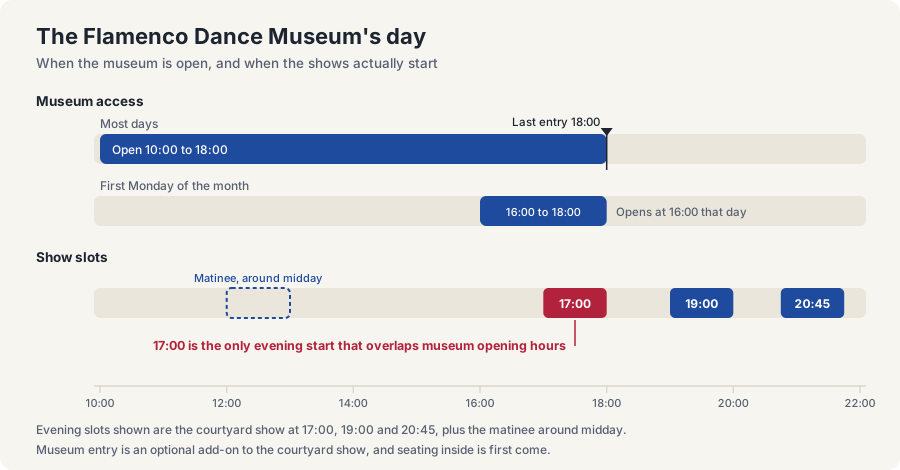
Badly, unless you plan for it. The museum runs 10:00 to 18:00 with last entry at 18:00, and opens at 16:00 on the first Monday of the month. Shows run at times such as 17:00, 19:00 and 20:45. Only the earliest slot overlaps the museum at all, so the exhibits have to come before the performance, not after.
This is the single most common planning mistake at this venue, and it costs people the part of the ticket they paid extra for. A traveller books the 20:45 courtyard show with museum entry included, arrives at 20:15, and finds the exhibits closed with no way to use the museum portion that evening. The fix is trivial and nobody tells you: visit the museum in the afternoon, leave, eat or walk, and come back for the show. The gap fills itself if you make a day of the quarter, since the cathedral and the Giralda tower stand a few minutes away on foot and run on timed entry slots of their own, so check times and tickets here before you fix the show slot.
The first-Monday exception catches a smaller group but catches them hard. On that day the museum does not open until 16:00, which collapses the afternoon window to two hours before last entry. Anyone whose only free day is the first Monday of the month should either take the earliest show slot or treat the museum as a separate visit entirely.
The third product solves the problem by ignoring it. The museum's noon matinee puts the show inside museum hours, includes a drink and museum entry, and costs $29, which makes it the neatest option for travellers whose evenings are already committed to dinner or another venue. Its review base is small at twenty, so the 4.9 is an early signal rather than a verdict, but for a daytime slot the matinee listing is worth a look if your evenings are already spoken for.
| Time | Museum | Shows |
|---|---|---|
| 10:00 | Open (except first Monday of the month) | Closed |
| Around midday | Open | Matinee slot |
| 16:00 | Open, and the first-Monday opening hour | Closed |
| 17:00 | Open, last entry approaching | Early show slot |
| 18:00 | Last entry, then closing | Between slots |
| 19:00 | Closed | Evening show slot |
| 20:45 | Closed | Late show slot |
Dinner is the other half of this puzzle and it works in your favour. Seville kitchens generally open around 20:00 to 20:30 and locals rarely sit down before 21:00, so a 19:00 show that ends at 20:00 lands you in the tapas streets exactly as they get good. The 20:45 slot pushes dinner past 22:00, which is entirely normal here but hard on anyone who has been walking since breakfast. The 17:00 slot is the one that leaves the whole evening open, and it is also the only one that lets you use a museum ticket the same day.
| If your day looks like this | Book | Because |
|---|---|---|
| Free afternoon, dinner plans at 21:00 | 17:00 courtyard show, museum first | Only slot that overlaps museum opening |
| Free evening, no fixed dinner | 19:00 courtyard show | Ends around 20:00, straight into the tapas hour |
| Late starter, long lunch | 20:45 courtyard show | Dinner after 22:00, which is normal locally |
| Evenings already committed | Matinee at $29 | Daytime slot with drink and museum included |
| Want the rarest room in the building | Vault show at $47 | Two rows, drink and museum entry in the price |
| First Monday of the month | Museum after 16:00, then an early show | Museum does not open until 16:00 that day |
How does first-come seating work, and when should you arrive?
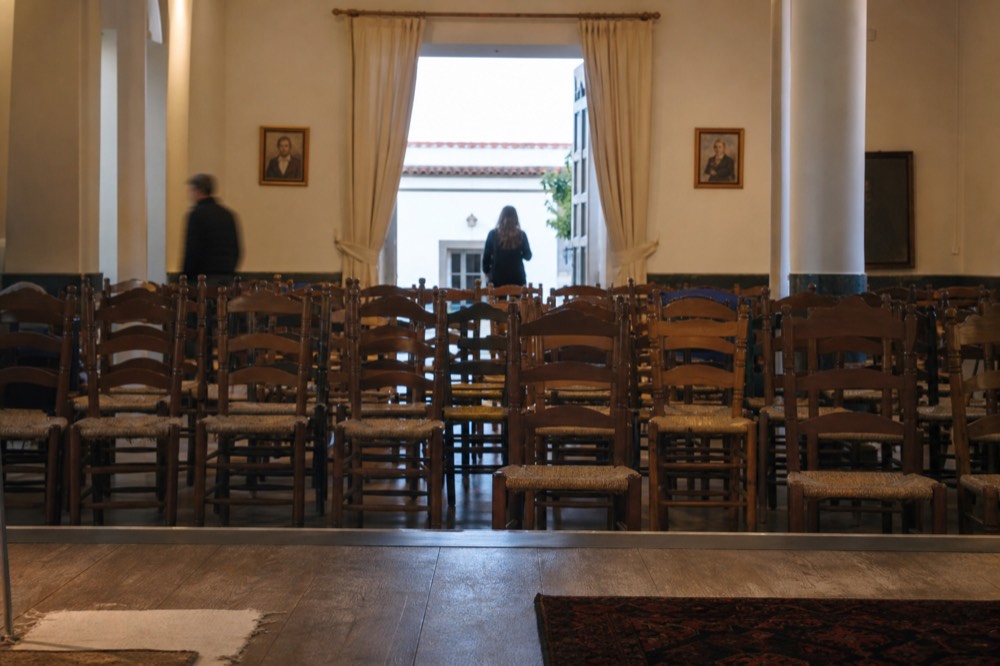
There are no assigned seats at the courtyard show, so position is decided by arrival order once doors open. The venue's own guidance is to be there about thirty minutes early. In the vault, with two rows, the same rule decides whether you are in the first row or the second, which is a real difference at that distance.
First-come seating is common in Seville and it surprises people who booked from abroad expecting a seat number. The system is fair and it rewards punctuality, but it means the value of your ticket is partly determined by when you show up. Thirty minutes early gets you a genuine choice. Five minutes early gets you whatever is left.
Where to aim depends on what you want to watch. Close to the floor is best for footwork and for the physical impact of the zapateado. A row or two back and slightly to the side is often better for seeing the whole choreography, particularly with six artists on stage. The very front is the most intense position and the least comfortable one for people who dislike being close enough to catch a dancer's eye.
Sitting close carries one obligation. Professional palmeros keep the compás, and a well-meaning audience clapping along at a formal show throws the rhythm at exactly the people relying on it, which is why etiquette guidance across Spanish venues is consistent about restraint. Shouts of encouragement are a different matter and always have been: olé, arsa, eso es, vamos, and agua, the last of them a call to cool an intense passage. Wait for a moment that earns one, then use it.
Other venues handle this differently, and it is worth knowing the alternatives when arrival time is a problem. Casa de la Memoria assigns seats through its box office in a fifteenth-century palace room; La Casa del Flamenco opens its doors twenty minutes before the hour; Pura Esencia in Triana sells skip-the-line entry. If standing in a queue with a small child is impossible, those differences matter more than a dollar or two on the ticket.
| Show | Seating | Recommended arrival | What it decides |
|---|---|---|---|
| Puro Flamenco courtyard | First-come, unassigned | About 30 minutes early | Row and angle in a full courtyard |
| Flamenco Dreams vault | Two rows, first-come | Early, the room is tiny | Front row or second row |
| Matinee | Museum setting | Ahead of the slot | Position in the room |
| Casa de la Memoria | Box-office-assigned seats | Doors before the hour | Position in a palace room |
| La Casa del Flamenco | Unnumbered, doors 20 minutes before | 20 minutes early | Position in the courtyard |
Is the museum stage better than a classic tablao?
Better for context, not automatically better for the flamenco. The museum gives you a designed hour by a resident company plus exhibits that explain what you are watching. A classic tablao gives you soloists taking turns in a room built for it. The strongest argument for the museum is that it is the only venue in the city that does both jobs in one building.
Compare the numbers first, because they are unusually clean here. The courtyard show sits at 4.8 across 6,781 reviews. The big theatre production nearby holds 4.7 across 19,771, the largest base in the city. Casa de la Memoria runs 4.7 across 1,088 with four artists and no microphones, and Los Gallos, operating since 1966 and holding an International Flamenco Award from 2024, sits at 4.8 across 526. Nothing in that spread suggests one venue type is decisively better than another.
The differences that matter are structural. The museum route front-loads understanding, and for a first flamenco experience that is a real advantage: knowing a soleá from an alegría before the singer starts changes what you hear. The unamplified palace rooms deliver the sound at its most naked. The theatre production delivers scale and reliability across several curtains a night. The Triana rooms deliver proximity and the lowest prices.
For travellers still deciding whether any of this belongs in the itinerary, the broader question of whether flamenco is worth it gets its own answer, and the free end of the spectrum is covered in the guide to watching without paying. Seville's official visitor information at the city tourism office is the right place to confirm anything about opening days around public holidays.
| Venue type | Cast | What you get | Trade-off |
|---|---|---|---|
| Museum courtyard | 6 artists | Choreographed hour plus exhibits | Museum closes before most shows |
| Almohad vault | Small ensemble | Two rows, drink, museum entry | Thin review base at 38 |
| Unamplified palace room | 4 to 5 artists | No microphones, natural acoustics | No production values by design |
| Theatre production | 6 performers, several curtains | Scale, reliability, 19,771 reviews | Less intimate than a small room |
| Triana rooms | 4 artists | Lowest prices, closest floor | Across the river, small capacity |
Frequently asked questions
Do you need a separate museum ticket to see the show?
It depends on the show. The courtyard show sells museum entry as an optional extra. The vault show includes museum access in the $47 ticket, and the noon matinee includes it too. Whichever you choose, the exhibits have to be visited before 18:00, since that is last entry and the evening slots start afterwards.
What time does the Museo del Baile Flamenco close?
The museum runs 10:00 to 18:00 daily with last entry at 18:00, and it opens at 16:00 on the first Monday of the month. Shows run at times such as 17:00, 19:00 and 20:45, so only the earliest evening slot overlaps museum hours at all.
Which show has the best seats?
The vault show, because it has only two rows, so every seat is close. The courtyard show is first-come once inside, with the venue advising about thirty minutes early. If arriving early is difficult, other rooms handle it differently: Pura Esencia in Triana sells skip-the-line entry, and La Casa del Flamenco opens doors twenty minutes before the hour.
Is the vault show worth the extra money?
It costs from $47 against $34 for the courtyard, and it includes a drink and museum entry that the courtyard ticket does not. For anyone who wanted both anyway, the real gap is small. The caution is the review base: 38 reviews at 4.7 is thin next to 6,781 at 4.8 upstairs, so you are partly buying the room rather than a long track record.
Can children go to the museum shows?
The vault show sets its floor at ten years old, which is the strictest age rule among the venues listed here. Elsewhere in the city, Teatro Flamenco Triana takes no under-sixes, Casa de la Memoria and La Casa del Flamenco both say the hour is not recommended below six, and Baraka in Triana allows children from four.
Is the noon matinee a real show or a shortened version?
It is the museum's daytime slot, sold at $29 with a drink and museum entry included, and it suits travellers whose evenings are already committed. The review base is only twenty, so the 4.9 average should be read as an early signal. For a first and only flamenco experience, the evening courtyard show has far more evidence behind it.
Build Your Flamenco Evening
Check Your Date Before Planning Dinner
Compare Options And Refine Your Choice
Watch flamenco in the courtyard of the Museo del Baile Flamenco. One-hour show. Museum admission is an optional ticket tier; choose the combination to visit the exhibits.
Four artists perform without microphones in an intimate palace room. Show admission; no food or drink. Seats assigned by the box office; arrive at least 20 minutes early.
Hear eight artists share a 75-minute classic tablao performance. Ages 6+; children accompanied by an adult. Venue wheelchair access does not extend to the bathrooms.
Compare Your Actual Evening Costs
Enter two complete quotes in the same currency for the same party. Include the show, food, drinks and transport you would buy. These are your estimates, not provider prices.
No option in this shortlist meets all those choices. Adjust your time, preference or eligibility filters, or reset to the general recommendation.
General recommendation; confirm the ticket option and guest requirements.
Museum Courtyard Flamenco
Watch flamenco in the courtyard of the Museo del Baile Flamenco. Check your date before arranging the rest of the evening.
One-hour show. Museum admission is an optional ticket tier; choose the combination to visit the exhibits.
Scheduled departures from Viator. Availability and final price are confirmed on Viator.