What should I not miss in Seville?
The don't-miss list argued item by item, with the timing traps that quietly ruin evenings: 6 pm closures, 8:30 pm kitchens, and the show slots that sell first.
 By Carmen Ruiz, Seville flamenco show specialist & cultural experience guide
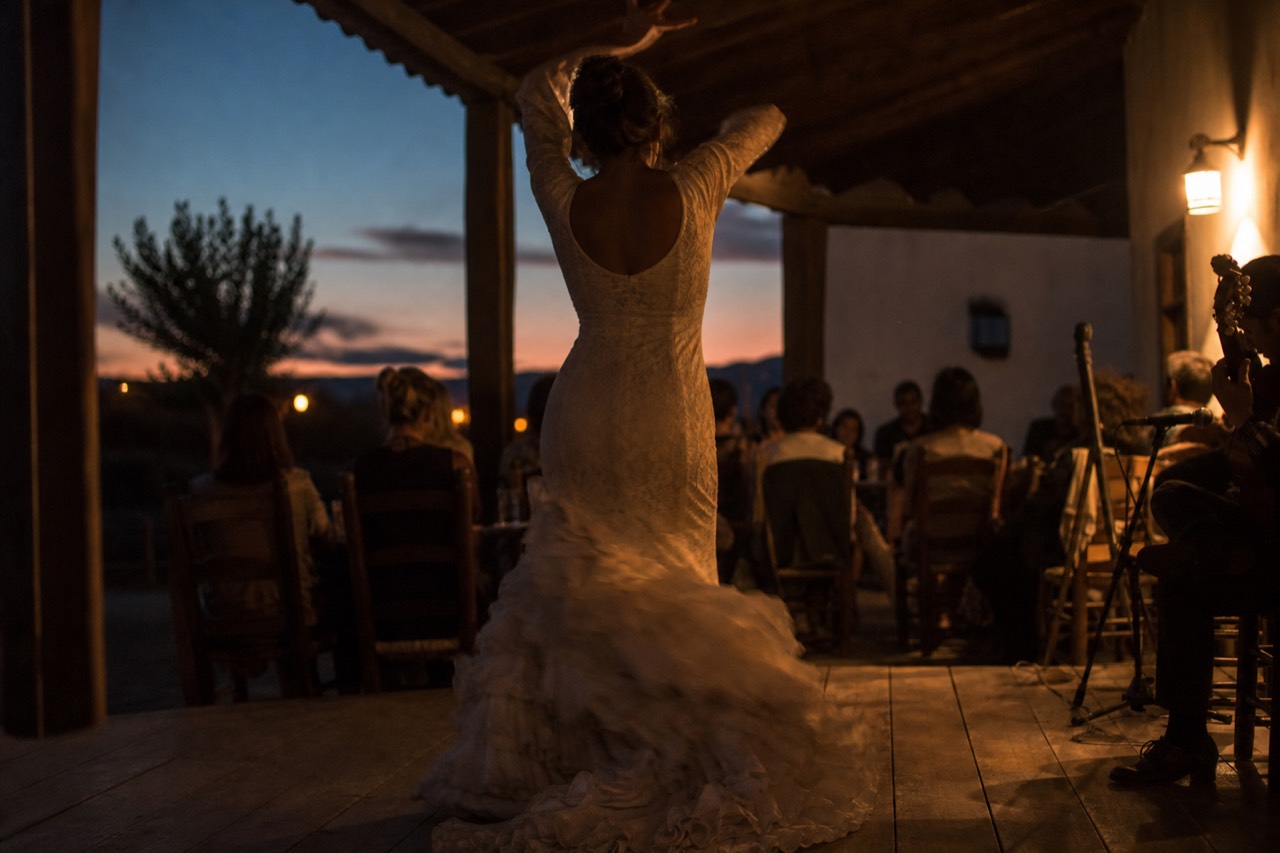
The Museo del Baile Flamenco stops admitting visitors at six. The kitchens at most Seville restaurants do not open until eight or half past. Locals sit down at nine. Somewhere in that badly-designed sequence sits every evening a visitor loses, and the fix is not a longer trip. It is knowing which hour belongs to which thing.
Prices and review counts in the comparisons are snapshots, not live quotes. Compare the same travel date, currency and ticket tier before paying.
What tops the list of things not to miss?
Four things carry a first visit: the Real Alcázar, the cathedral and its bell tower, the Triana side of the river, and one evening at a live flamenco show. Three of those wait patiently. The fourth is a room with limited seats on a fixed clock, and it is the one people end up regretting.
Ranking a don't-miss list by regret rather than by fame changes the order. Nobody leaves Seville having missed the cathedral, because it is enormous, central and open all day. Plenty of people leave having meant to see flamenco. The difference is not interest, it is availability: a palace can absorb every visitor in the city, a sixty-seat tablao cannot, and the busy evening slots go days ahead in high season. The cathedral makes the point from the other side. Entry there, with the Giralda climb included, is a formality you can settle in a minute, so check availability here and spend the rest of the planning energy on the evening.
The second filter is distinctiveness. Andalusia is full of Moorish architecture and river quarters. There is one city where flamenco is woven into the street names, the neighbourhood identity and the professional calendar. Flamenco sits on the UNESCO Representative List of the Intangible Cultural Heritage of Humanity, inscribed in 2010, and Seville is where the working density of it lives.
| What | Why it is on the list | When to do it | Booking pressure |
|---|---|---|---|
| A live flamenco evening | The city's own art form, sixteen bookable shows nightly | 7:00 to 8:30 pm | High, and rising at weekends |
| Real Alcázar | Palace rooms and gardens still in royal use | Morning, first entry | Moderate, timed entry |
| Cathedral and bell tower | The climb and the view over the old town | Late morning | Low |
| Triana | Ceramics, the market, the flamenco monument | Late afternoon into dinner | None, it is a neighbourhood |
| Plaza de España | Open-air architecture at golden hour | 6:00 pm to sunset | None, free and open |
Why is a flamenco evening the one booking to make first?
Because it is the only item on the list with a seat count. The sixteen shows checked for this site carry 38,810 traveller reviews between them, and the 7:00 to 8:30 pm window is where demand concentrates. Tickets run from $24 to $128, and cancellation depends on the selected option and its deadline.
That last detail is what makes early booking a free option rather than a commitment. Holding a 7:30 pm seat three weeks out costs nothing if the trip reshuffles, and it removes the single most common failure mode in a Seville itinerary: leaving the show to the last night, finding the good slots gone, and settling for whatever is left.
Format matters more than price here. A four-artist hour with no microphones in a fifteenth-century courtyard is a different event from a theater production with a dozen performers and proper sightlines, and neither is objectively better. The small rooms give proximity and the sound of feet on wood with nothing between you and it. The big stages give comfort, lighting design and a guaranteed view, and they trade away the intimacy that makes the small rooms worth the stiff chairs.
One room deserves singling out for a reason that has nothing to do with staging. Teatro Flamenco Triana is a project of the Cristina Heeren Flamenco Art Foundation, and 100% of its profits fund flamenco teaching. It runs a strict no-photos hour, which is precisely why the room stays quiet, and you can check dates and current prices before locking the evening. If September 2026 is the travel window, the XXIV Bienal de Flamenco is in town and the whole calendar changes, as the Bienal's September 2026 programme sets out.
What should you not miss in the Santa Cruz quarter?
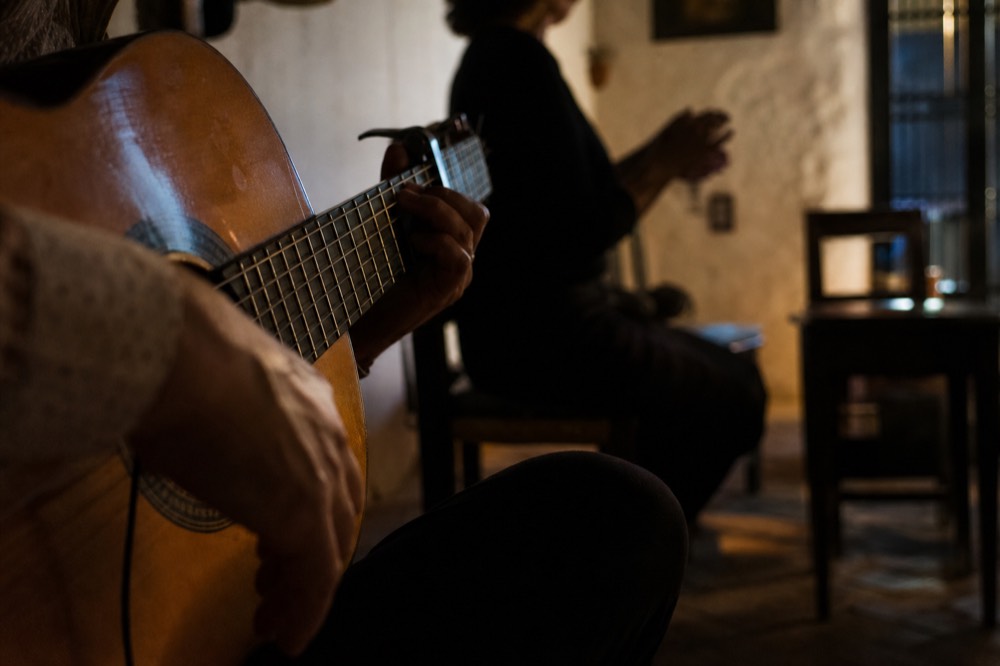
Santa Cruz holds the highest concentration of small flamenco rooms in the city, most of them inside fifteenth-century palace courtyards a few minutes from the cathedral. Casa de la Memoria, La Casa del Flamenco, Casa de la Guitarra and Tablao Los Gallos all sit within the old Jewish quarter's lanes.
These are the rooms that make people rethink what a flamenco show is. Casa de la Memoria on Calle Cuna runs an hour with four artists, two dancers, a singer and a guitarist, with no microphones at all. La Casa del Flamenco performs in a fifteenth-century courtyard with natural acoustics, five artists, doors opening twenty minutes before the start. Casa de la Guitarra pairs a one-hour show with a historic flamenco guitar collection hanging on the walls of a genuinely tight room, and at $24 it is the cheapest ticket on this site.
Los Gallos is the outlier, and the most decorated. It has been running on Plaza Santa Cruz since 1966, fields eight artists across three dancers, three singers and two guitars, and took an International Flamenco Award in 2024. It is the closest thing Seville has to an institution that is still a working tablao rather than a museum piece, and the listing carries its current times and prices.
The trade-off: unamplified rooms are unforgiving of latecomers and of anyone who talks. Seating in several is unnumbered or first-come, so arriving on time is how you get a decent view. The small and intimate rooms are grouped separately for that reason.
Is Triana worth crossing the river for?
Yes, and not only for the view back at the tower. Triana is a working quarter with its own flamenco lineage, its own covered market, and the Monumento al Arte Flamenco standing on its side of the water. Several of the city's small rooms sit within a few streets of it.
Calle Betis runs along the river and carries the best late-afternoon walk in Seville, with the old town on the far bank turning orange. Calle Pureza runs behind it, narrower and more residential. Between them sits a cluster of small rooms: a riverside tablao on Betis with a guitarist, singer and two dancers and a drink included, another on Pureza with four artists in a room barely bigger than a living room.
Triana is also where the food gets less staged. The market and the bars around it operate on local hours rather than tourist ones, which means quiet at seven and full at ten. Anyone wanting the neighbourhood and a show in one move can take the four-hour tapas route that starts at the flamenco monument, runs tapas rounds and four drinks through real bars, and finishes in a show seat with a group capped at twelve, and the listing shows which evenings still have space. The longer case for the quarter is in why Triana matters to flamenco.
What are the timing traps that ruin an evening?
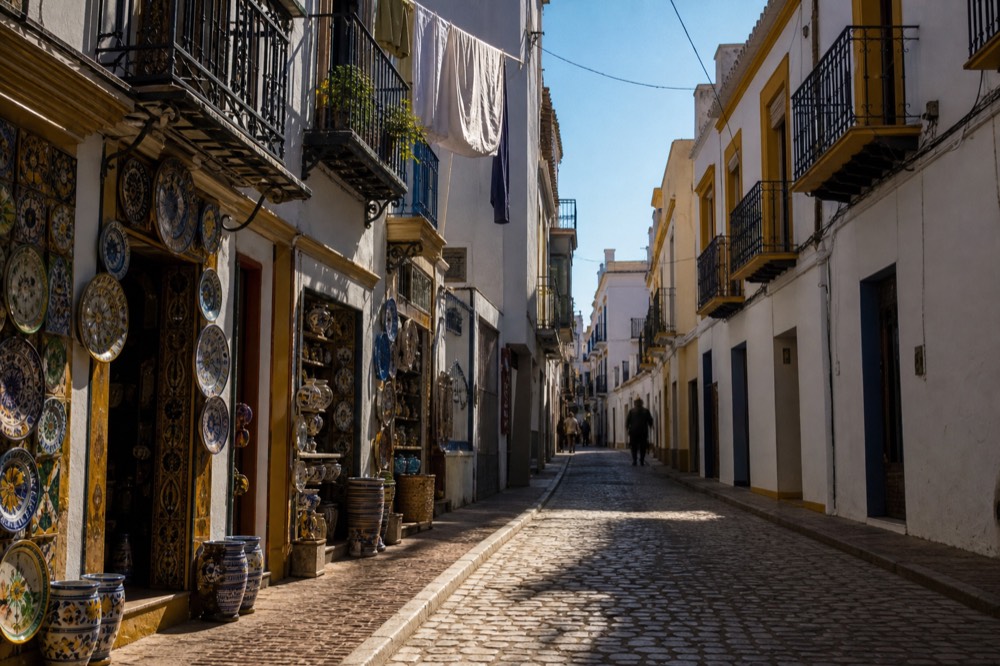
Three of them. The Museo del Baile Flamenco admits its last visitors at 18:00, restaurant kitchens do not open until 8:00 or 8:30 pm, and the 7:00 to 8:30 pm show slots sell out before the rest. Miss any one and the evening reorganises itself around the gap.
The museum trap catches people who plan to see the collection and the show together. Museum access runs 10:00 to 18:00 with last entry at 18:00, and on the first Monday of the month it does not open until 16:00, while the shows themselves run at times like 17:00, 19:00 and 20:45. Seeing both means arriving in the afternoon, not turning up at seven expecting to do the exhibition first.
The dinner trap catches people who book a 9:00 pm show and plan to eat before it. At eight the kitchens are only just opening and the good places are empty because nobody local has arrived yet. The fix is either an early show and dinner at nine, or an early dinner and a 10:30 pm curtain.
| Venue | Arrival and access | Length | Ages | From |
|---|---|---|---|---|
| Casa de la Memoria | Box-office-assigned seats, arrive early | 1 hour | Not for under 6s | $29 |
| La Casa del Flamenco | Doors 20 minutes before | 1 hour | Not for under 6s | $29 |
| Puro Flamenco, Museo del Baile | First-come seating, arrive 30 minutes early | 1 hour | Museum closes ~6 pm | $34 |
| Teatro Flamenco Triana | Strict no-photos hour | 1 hour | No under 6s | $29 |
| Flamenco Dreams | Two rows of seats in an Almohad vault | 1 hour | Not for under 10s | $47 |
| Baraka, Triana | Drink included | 1 hour | No under 4s | $27 |
| Tablao El Arenal | 22 steps to the bathrooms, no lift | 75 minutes | Drink included | $58 |
Getting home is the one thing that is not a trap. The metro runs to roughly 11:00 pm Monday to Thursday and to about 2:00 am on Fridays and Saturdays, and taxis and app cars run all night, per the city's metropolitan transport pages.
What can you see for free, and when is paying better?
La Carbonería is the honest free answer. It announced a temporary closure; before closing it charged nothing at the door, and runs roughly thirty-minute sets several times an evening, often from around 7:00 to 8:30 pm. You pay for drinks, some accounts note cash only, and seats go to whoever turns up before about 7:20 pm.
What you get for free is a rustic bar with a performance in it, not a stage with sightlines. The sets are short, the room is loud, and the artists play over conversation. On a good night that is the point, closer to how flamenco actually lives in Andalusia than any ticketed hour. On a bad night it is a crowded bar where you cannot see the dancer's feet.
Paying wins when the performance is the reason you came. A ticketed hour buys a seat facing the stage, a full cuadro rather than a duo, and a start time you can plan a dinner around. Both belong on a three-night trip: the free bar for the atmosphere, the ticketed room for the art. The La Carbonería guide sets out what the room is like now, and the ranked comparison of rooms does the same for the paid ones.
What would you regret missing most?
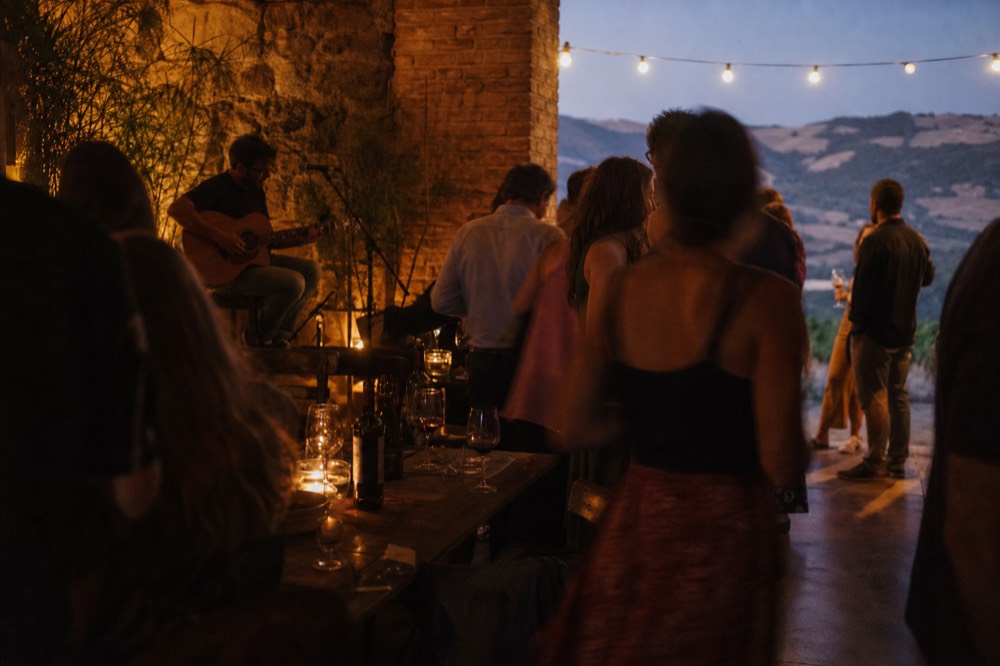
The evening. Monuments photograph well and are described accurately afterwards. A room going silent because a singer did something difficult three metres away is the part people describe emotionally, and it is the only part of the list that can be sold out by the time you get there.
That is not an argument against the Alcázar, which deserves the first morning and full attention. It is an argument about sequencing. Daylight belongs to the buildings, and the hours after six belong to something that happens rather than something that stands there. A trip that gets that order right does not have to choose between them.
So the practical version of the don't-miss list is short. Book one show before arrival, in the 7:00 to 8:30 pm band, on an early night of the trip rather than the last one. Put the Alcázar at opening on a different day. Cross the river once in the late afternoon. Everything else in Seville can be improvised, and improvising in this city is half the pleasure. If the trip is short and the sequencing is tight, how many days Seville really needs works through the day-by-day version, and the number one thing to do here makes the case for the ranking.
Build Your Flamenco Evening
Check Your Date Before Planning Dinner
Compare Options And Refine Your Choice
See a foundation-run flamenco performance whose proceeds support teaching. Ages 6+. No bar. Seats follow purchase order; wheelchair users must contact the provider before booking.
Four artists perform without microphones in an intimate palace room. Show admission; no food or drink. Seats assigned by the box office; arrive at least 20 minutes early.
An English-speaking guide combines tapas, drinks and a flamenco show over four hours. Tapas dinner, four drinks and show included. Ages 13+. Not recommended for vegans; allergy cross-contact cannot be guaranteed. No private transport.
Compare Your Actual Evening Costs
Enter two complete quotes in the same currency for the same party. Include the show, food, drinks and transport you would buy. These are your estimates, not provider prices.
No option in this shortlist meets all those choices. Adjust your time, preference or eligibility filters, or reset to the general recommendation.
General recommendation; confirm the ticket option and guest requirements.
Teatro Flamenco Triana
See a foundation-run flamenco performance whose proceeds support teaching. Check your date before arranging the rest of the evening.
Ages 6+. No bar. Seats follow purchase order; wheelchair users must contact the provider before booking.
Scheduled departures from Viator. Availability and final price are confirmed on Viator.