Does Seville have good nightlife?
Yes, but it runs on a different clock. Kitchens at 8:30 pm, dinner at 9, shows from 6 pm to 10:30 pm, last metro at 11 on weeknights and 2 am at weekends.
 By Carmen Ruiz, Seville flamenco show specialist & cultural experience guide
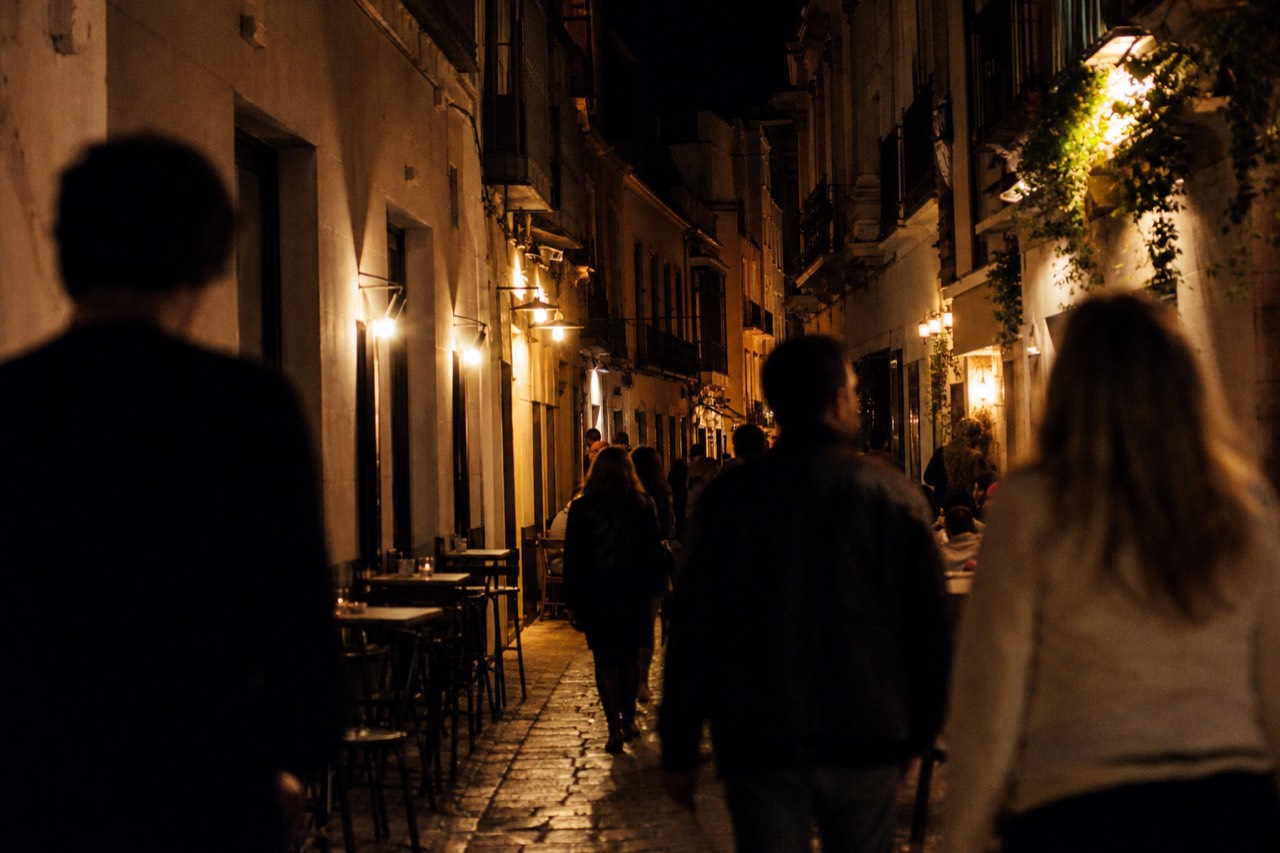
At eight in the evening a Seville restaurant looks like it is failing. Empty tables, staff standing about, one couple in the corner who are obviously not from here. Come back at half past ten and the same room is three deep at the bar with a queue outside. Nothing has gone wrong. The city simply starts later than the guidebook clock suggests, and understanding that shift is most of what makes a Seville night work.
Prices and review counts in the comparisons are snapshots, not live quotes. Compare the same travel date, currency and ticket tier before paying.
Does Seville have good nightlife, and what kind?
Yes, though it is evening culture rather than club culture. The strength here is a long, sociable stretch running from about 8:00 pm to well past midnight, built on tapas bars, street terraces and live flamenco, rather than on late-opening clubs. Anyone expecting Madrid's or Ibiza's shape will find something better but different.
The structure of a Seville night has three moving parts. There is the show, which is a fixed-time event and the only part that needs booking. There is dinner, which is not one sitting but a slow crawl across several bars, small plates at each. And there is the after, which is talking outdoors until whatever hour suits, usually with a drink that costs less than the taxi home.
What makes it good, rather than merely late, is density and safety. The old town is walkable end to end, the bars sit close enough to hop three or four in an evening without a taxi, and the streets stay busy with families and older locals rather than emptying out into a drinking crowd. That mix keeps the atmosphere social instead of aggressive, which is a genuine difference from a lot of European city breaks.
The honest caveat: if the definition of good nightlife is a big room with a DJ until six, Seville is not the strongest city in Spain for that. Its edge is in the hours between eight and one, not after two.
Is Seville a late-night city?
By northern European or American standards, extremely. Restaurants generally open around 8:00 to 8:30 pm and locals rarely dine before 9:00 pm, with the busiest window running 9:00 to 11:00 pm. Tapas bars build through the evening and some stay busy through the night.
The practical consequence is that anyone eating at seven is eating alone, in a kitchen that has just opened, surrounded by other visitors doing the same. It is not a bad meal, but it is not the room the place is famous for. The room fills two hours later.
That late clock is also why an early flamenco show works so well in Seville and would fail in a city that eats at seven. A 7:00 pm or 7:30 pm curtain finishes at eight or half past, which is precisely when the kitchens unlock. The show does not eat into the night, it opens it.
The hour before the curtain is the one nobody plans for, and the river handles it well. Boats leave from the Torre del Oro quay in the middle of the old town and put you back on the same bank you started from, which is about as low-friction as an early-evening hour gets: check sailing times here.
Getting the sequence wrong is the classic first-night mistake: dinner at 7:30, a 9:00 pm show, and then a city that is only just warming up when the evening is already over. Reversed, the same components make a much better night. The day-by-day version of this sequencing is in how many days Seville really needs.
What time do flamenco shows start in Seville?
Across the city, curtains run from about 6:00 pm to 10:30 pm, with most venues offering two to four slots a night. The heaviest cluster sits between 7:00 and 8:30 pm, which is also the band that sells out first. Most shows run one hour; the larger tablaos run 75 or 90 minutes.
The spread matters because it lets the show slot into whichever part of the evening is free. An early curtain suits families and anyone flying out the next morning. A late one suits people who ate at eight and want the night to end on something rather than start with it.
| Venue or type | Typical slots | Length | Notes |
|---|---|---|---|
| The busiest central tablao | 18:00, 19:30, 21:00, 22:30 | 60 minutes | Extra 16:30 curtain added in high demand |
| Museo del Baile Flamenco | 17:00, 19:00, 20:45 | ~1 hour | Museum itself admits until 18:00 |
| Two-slot tablaos | 18:30 and 20:30 | 60 minutes | The common pattern in smaller rooms |
| Most Santa Cruz and Triana rooms | Cluster 19:00 to 20:30 | 60 minutes | Drink usually included at this size |
| Larger dinner tablaos | Evening seatings | 75 to 90 minutes | Dinner or tapas tiers on top of the ticket |
La Carbonería Is Temporarily Closed. La Carbonería announced a temporary closure for technical reasons on 3 June 2026, until further notice. Its own site has not posted a reopening announcement. Descriptions of its free-entry format below refer to how it operated before closure; do not plan an evening there without confirming that it has reopened. Read the venue’s closure notice.
| La Carbonería (free) | Roughly 19:00 to 20:30 onward | ~30 minute sets | Several sets a night, seats gone before 7:20 pm |
Triana is the quarter where the show and the night sit closest together, because the small rooms are on the same streets as the bars. A one-hour room on Calle Pureza with four artists and a drink included leaves you on a street that is filling up as you walk out, and the listing shows which slots are temporarily closed. The wider set of small rooms is grouped under the intimate flamenco rooms.
What stays open after the show?
The bars, and they get better after ten. Tapas bars fill through the evening and several stay busy deep into the night, with dishes running roughly €3 to €5 each. La Carbonería keeps running free flamenco sets in a rustic bar setting, paying only for drinks, with some accounts noting cash only.
The after-show hour is the part visitors most often skip because they treat the show as the end of the evening rather than the middle. At half past nine, with the room emptying out, the correct move is two streets over to whatever bar has the most noise coming out of it. Portions are small by design, which is what makes three or four stops in a night normal rather than excessive.
There is a version of this that removes the guesswork entirely. A four-hour tapas route starting at the Monumento al Arte Flamenco in Triana runs tapas rounds and four drinks through real working bars with a group capped at twelve, then finishes in a show seat, so the crawl and the anchor arrive as one evening. Check which evenings still have space if that suits the first night better than improvising.
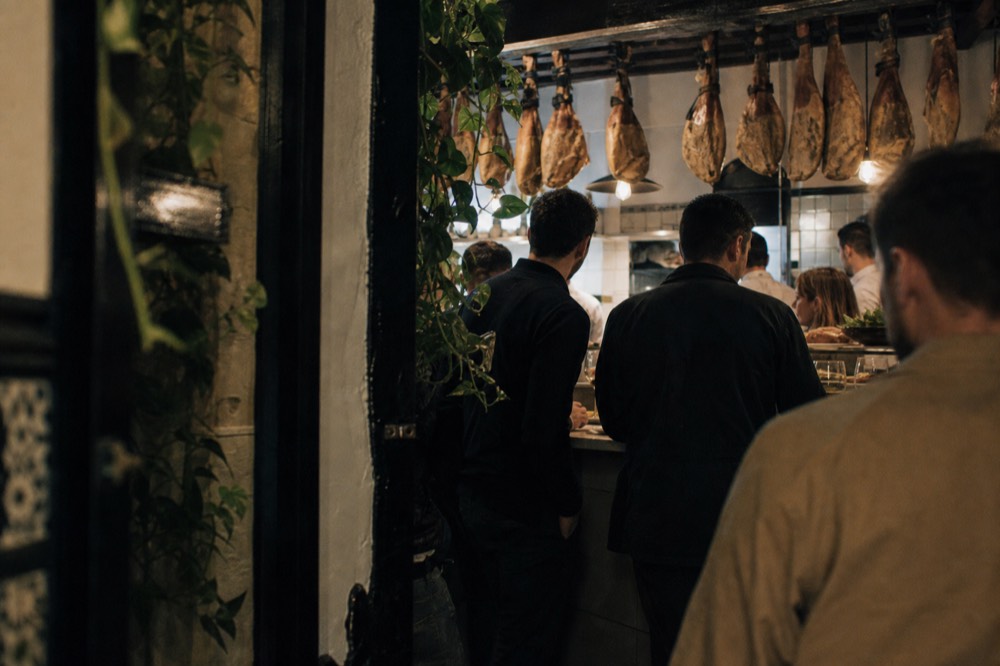
La Carbonería deserves its own mention because it answers the question people are really asking when they ask about Seville nightlife: is there anywhere the flamenco is not on a ticket. There is. It announced a temporary closure; its former entry was free, the sets run about thirty minutes, and there are several a night from around seven or half past eight depending on the evening. Seats go to whoever arrives first, and the guidance from regulars is to be there before about 7:20 pm. The room is a bar, not a theater, so the sets play over conversation and sightlines are whatever you can find. The La Carbonería guide covers what to expect now.
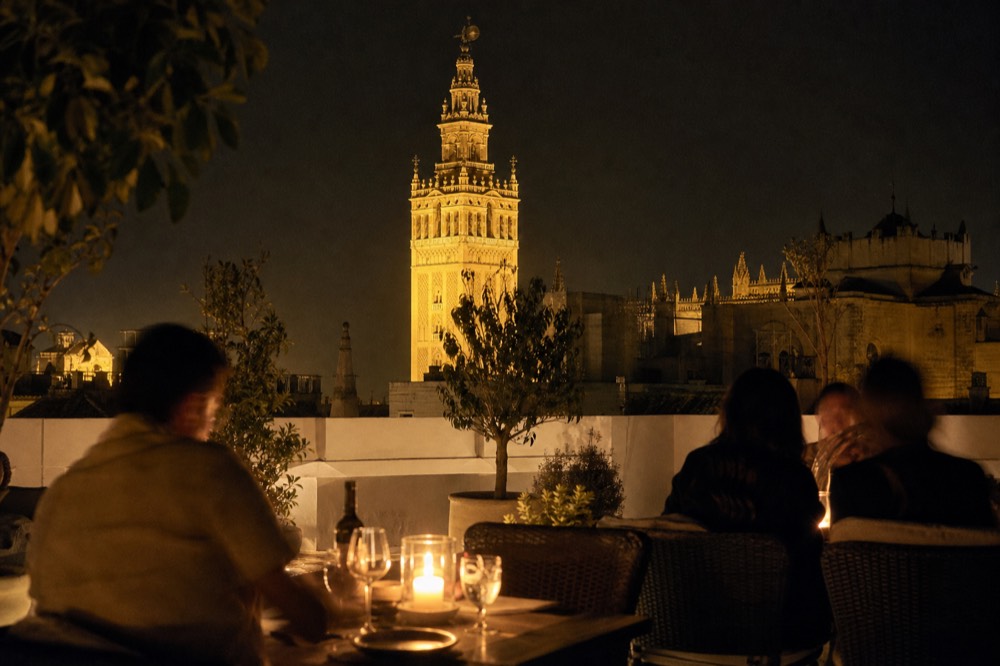
If the plan is to make the whole night one booking instead of assembling it bar by bar, a rooftop dinner facing the cathedral with a show attached and transport arranged separately excluded is the maximal version, and the package details are on the listing. The full set of those combinations sits under the dinner and show options.
How do you get home late in Seville?
Easily, and cheaply. The metro runs until roughly 11:00 pm Monday to Thursday and until about 2:00 am on Fridays, Saturdays and holidays. The tram runs a little later again, to around 11:30 pm on quiet nights and 1:30 to 2:00 am at weekends. Taxis and app cars operate 24 hours with plentiful ranks.
For most visitors this barely comes up, because the old town is small enough to walk and almost everything worth doing at night sits inside it. The transport question matters for anyone staying out towards Santa Justa or in the newer districts across the river, where an 11:00 pm metro cutoff on a Tuesday can end a night earlier than intended.
Sleeping in the middle removes the question altogether. EME Catedral Mercer stands directly opposite the cathedral, inside the same walking radius as the Santa Cruz tablaos and the tapas streets, and it keeps a rooftop bar of its own for the part of the night that has no plan.
EME Catedral Mercer Check rates ›
| Mode | Monday to Thursday | Friday and Saturday | Notes |
|---|---|---|---|
| Metro | Until roughly 11:00 pm | Until roughly 2:00 am | Later on holidays too |
| Tram / MetroCentro | Until roughly 11:30 pm | Roughly 1:30 to 2:00 am | Central old-town route |
| Taxi and app cars | 24 hours | 24 hours | Ranks throughout the centre |
| Airport taxi | Fixed €26, 7:00 am to 9:00 pm | Fixed €29 nights, weekends, holidays | Official published tariff |
The timetables sit on the city's own metropolitan transport pages, and the airport fares come from the official airport taxi tariff. A weeknight plan that ends after eleven should simply assume a taxi, which across the old town is a short and inexpensive ride.
So is Seville's nightlife actually good?
Good, and specific. It will not out-club Madrid or Barcelona, and it does not try. What it offers instead is a five-hour stretch of outdoor social life with genuinely world-class live performance folded into it, at prices that do not punish a long night.
The strongest version of a Seville night has a shape to it. Something at seven or half past that is worth sitting still for, ideally a flamenco hour in a room small enough to hear the feet on the boards. Dinner at nine, spread over several bars rather than one table. Then the part with no plan, outdoors, until the conversation runs out.
Flamenco is what lifts that from pleasant to distinctive, and it is the only element that needs deciding in advance, since the busy slots go first and Refund terms and deadlines depend on the selected booking option. September 2026 raises the ceiling further, with the XXIV Bienal de Flamenco in the city and a programme the ordinary calendar cannot match, as the Bienal's September 2026 programme explains. For the argument that this evening is the single best thing the city offers, the number one thing to do here makes the case in full, and why Triana matters to flamenco covers the quarter where the night runs longest.
Build Your Flamenco Evening
Check Your Date Before Planning Dinner
Compare Options And Refine Your Choice
Settle into a one-hour Triana performance with a drink included. Ages 4+. Meet at Calle Pureza 107; hotel transport is not included.
Hear a guitarist, singer and two dancers in a small Triana room. Show with a welcome drink described in the itinerary; additional drinks extra. Meet at Calle Betis; no transfer. Children accompanied by an adult.
An English-speaking guide combines tapas, drinks and a flamenco show over four hours. Tapas dinner, four drinks and show included. Ages 13+. Not recommended for vegans; allergy cross-contact cannot be guaranteed. No private transport.
Compare Your Actual Evening Costs
Enter two complete quotes in the same currency for the same party. Include the show, food, drinks and transport you would buy. These are your estimates, not provider prices.
No option in this shortlist meets all those choices. Adjust your time, preference or eligibility filters, or reset to the general recommendation.
General recommendation; confirm the ticket option and guest requirements.
Baraka Show With A Drink
Settle into a one-hour Triana performance with a drink included. Check your date before arranging the rest of the evening.
Ages 4+. Meet at Calle Pureza 107; hotel transport is not included.
Scheduled departures from Viator. Availability and final price are confirmed on Viator.